
Last updated November 16, 2026
 Whole-home duct cleaning
 Dryer vent cleaning
 Camera inspection
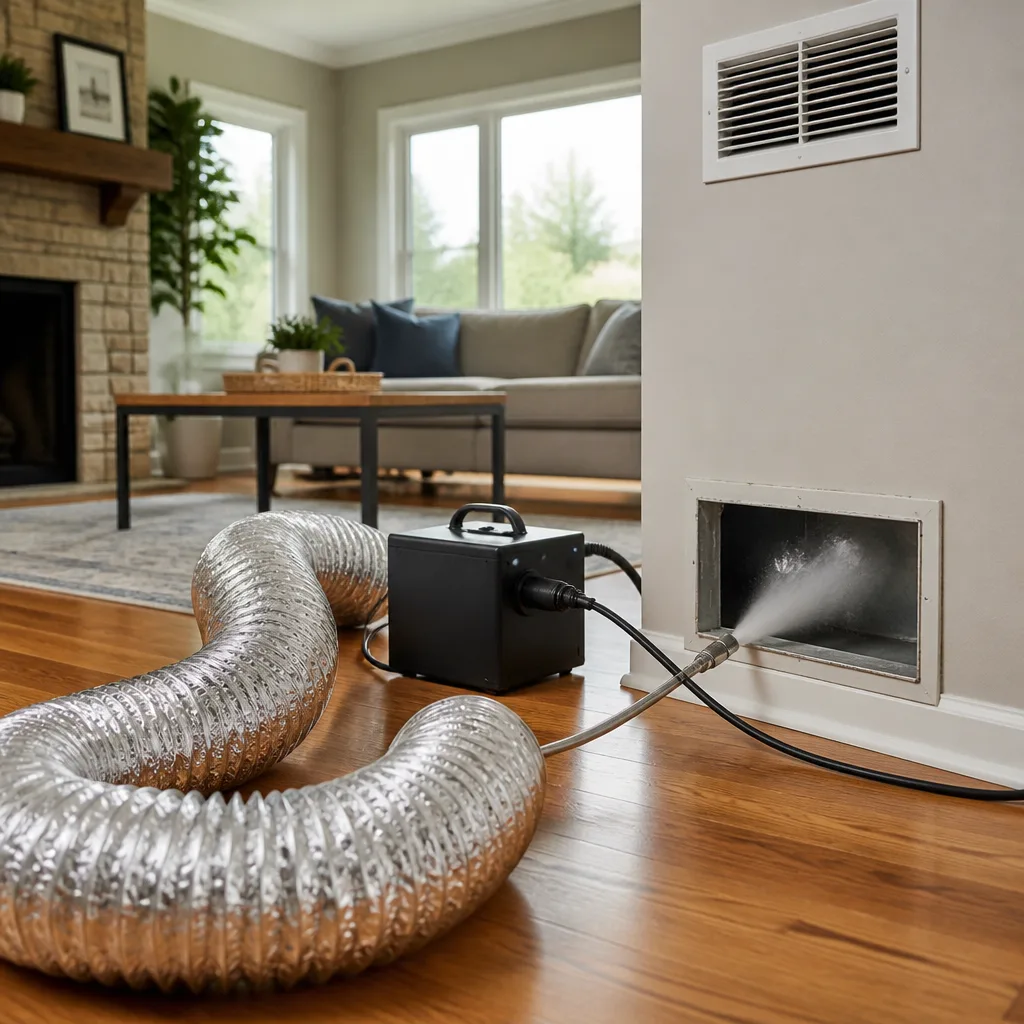 Sanitizing & deodorizing
Whole-system duct and dryer vent check with before-and-after photos - you see exactly what came out of your vents
That "$99 whole-house special" is a bait ad - the real number appears once they are in your hallway, or the "clean" is a shop-vac at the register. We photograph the inside of your ducts before and after instead.
Air Duct Repair Troubleshooting in Daly City: Common Problems and How to Fix Them
Most homeowners in Daly City diagnose duct trouble by its symptom: the back bedroom runs hot, the energy bill climbed, the hallway never quite feels like the rest of the house. That’s the wrong end of the problem. A duct system fails at a joint, a seam, or a crushed run, and the symptom shows up somewhere else entirely. Tracing the failure by pressure and airflow, not by guesswork, is how a technician reads a system in the first ten minutes. This guide teaches you that read: how to tell a sealing failure from a collapsed run, what a disconnected joint feels like at the register, and how to walk your own home room by room so that a repair visit starts at the actual problem instead of from scratch.
Quick Answer
Air duct problems in Daly City usually trace to one of three failures: a broken seal at a joint or boot, a crushed or collapsed flex run, or a duct that has separated entirely from its collar. You can identify the first clues yourself by checking airflow at each register and looking for gaps at accessible joints. Everything past that – pressure diagnostics, negative pressure zones near gas appliances, and repairs inside crawl spaces or wall chases – belongs to a trained technician.
Styles & brands we work with
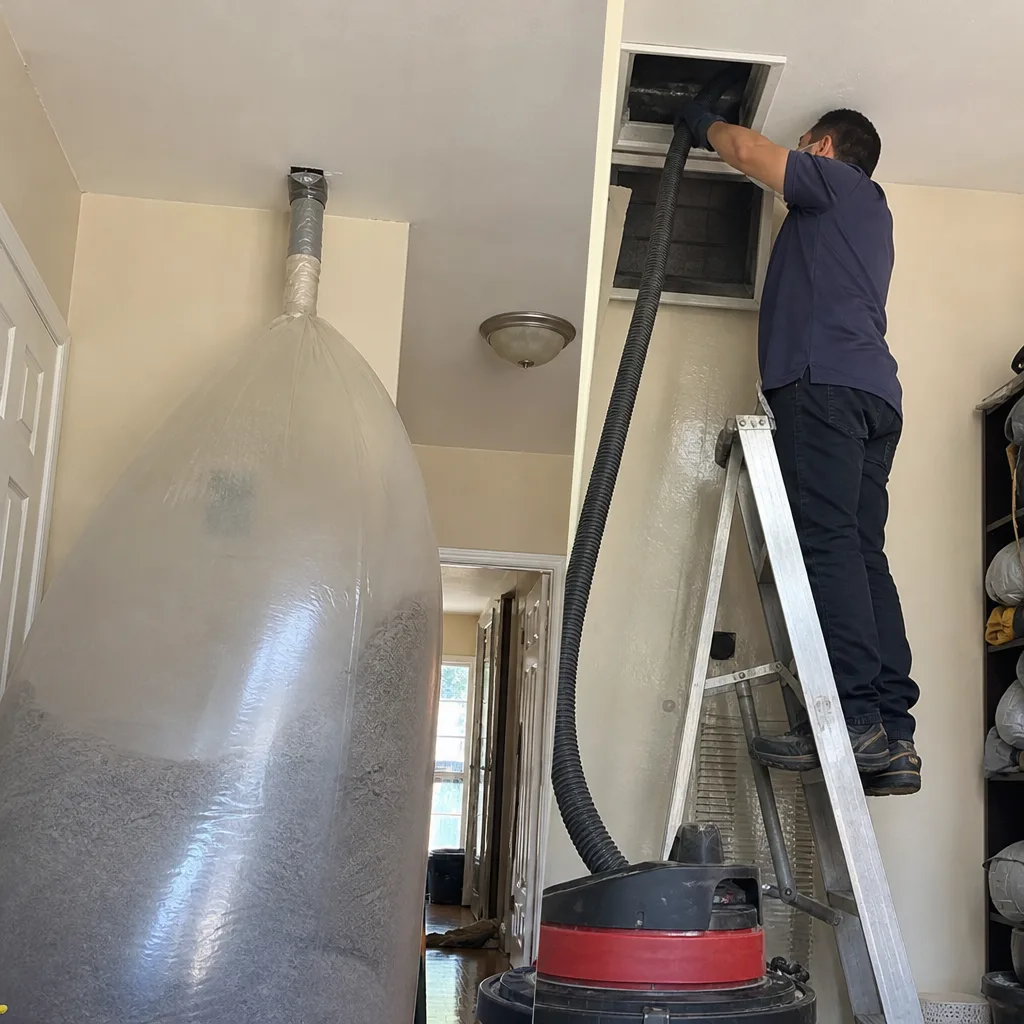
- Whole-home duct cleaning
- Dryer vent cleaning
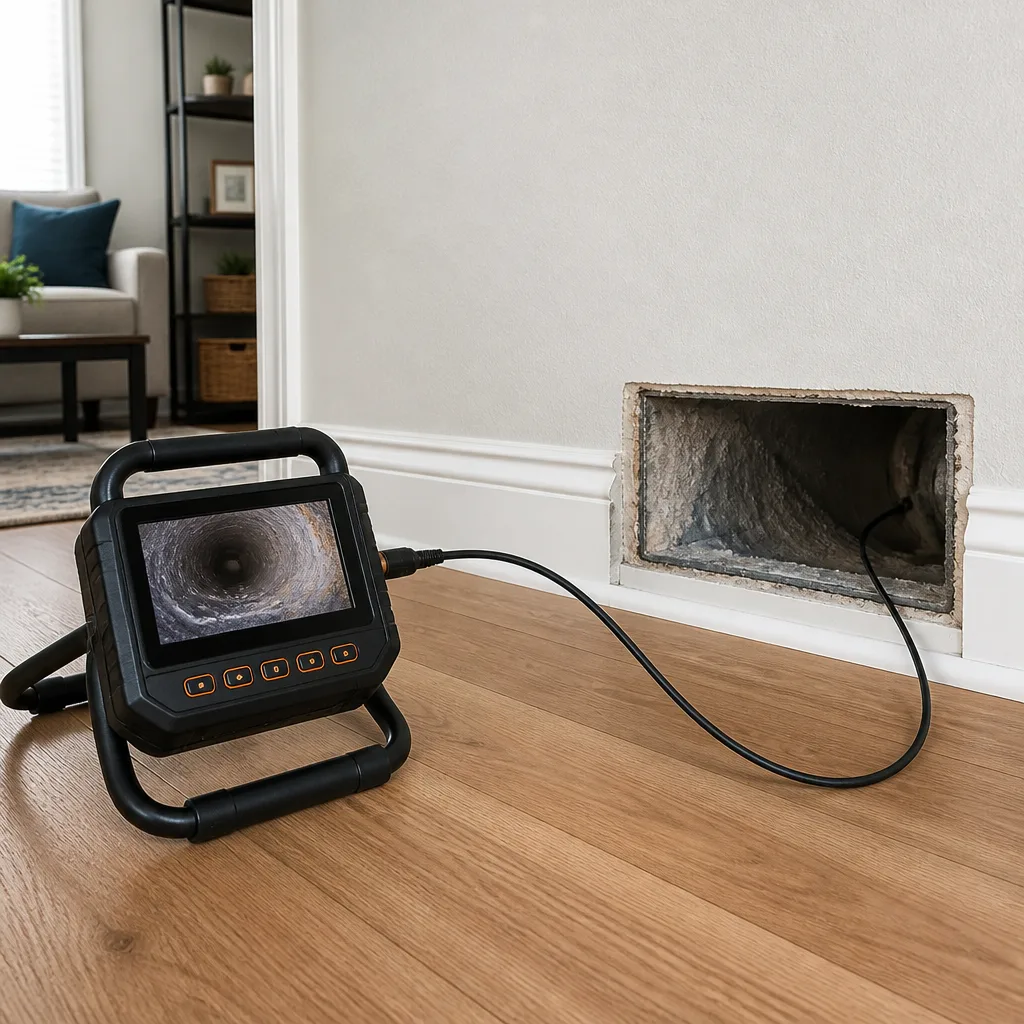
- Camera inspection
- Sanitizing & deodorizing
Table of Contents
- How Do You Read a Duct System Like a Technician?
- What Are the Three Main Duct Failures and How Do You Tell Them Apart?
- What Duct Failures Are Specific to Daly City Homes?
- Which Duct Problems Can You Fix Yourself and Which Need a Professional?
- Why Does Fixing One Symptom Create Pressure Imbalance?
- Room-by-Room Diagnostic Checklist
- When Does a Duct System Need Repair Rather Than Cleaning?
- Common Mistakes to Avoid
How Do You Read a Duct System Like a Technician?
A duct system is a pressure vessel, not a set of pipes. The blower pushes a fixed volume of air into a network that was sized for a specific amount of resistance, and every leak, crush, or separation changes that resistance. Read the system by those changes and the failure reveals itself.
Start with the feel test. Hold your hand at each supply register with the system running. Airflow should feel roughly consistent across rooms of similar size. A register that pushes noticeably less than its neighbors is either at the end of a long run (normal) or downstream of a restriction (not normal). A register that pushes more than its neighbors, or whistles, often signals that air is escaping somewhere upstream and forcing extra volume through the remaining path.
Then listen. A duct that flutters, pops, or hums under load is telling you it has lost its mechanical support – flex duct sagging off a hanger, a joint that has separated so the collar rattles, or an inner liner that has torn loose inside the jacket. Sound is often the first clue that a run has collapsed, because a crushed duct forces air through a smaller opening at higher velocity.
Next, look at what’s accessible. In Daly City, that usually means the furnace closet, the attic hatch if the home has one, and any exposed ductwork in a garage or crawl space. Check the joints, the boots where ducts meet registers, and the connection at the plenum. A gap you can see is a leak you can count.
- Feel: weak or uneven airflow at registers points to a restriction or leak upstream.
- Listen: fluttering, whistling, or rattling points to a separated joint or collapsed run.
- Look: visible gaps, sagging flex, peeling tape, or cracked sealant at accessible joints.
- Compare: measure airflow feel at every register in the same room first, then across rooms.
That’s the whole initial read. No gauges, no tools. What you’re doing is mapping which rooms are starved and which are overfed, and noting where the system sounds wrong. A technician takes that map and confirms it with static pressure readings, but the map itself is the starting point that turns a vague complaint into a specific repair.
What Are the Three Main Duct Failures and How Do You Tell Them Apart?
Nearly every duct repair we handle comes down to one of three failure types, and they behave differently at the register. Knowing which one you’re feeling narrows the repair before anyone opens a panel.
1. Sealing Failure
A seal fails when the tape, mastic, or gasket at a joint dries out, peels, or cracks. The joint is still physically connected, but air escapes through the gap. At the register, this feels like a modest, steady loss of airflow – not dramatic, but persistent. You often find the evidence at accessible joints: duct tape curling at the edges, mastic that has cracked into flakes, or a visible dark line where air has been leaking and pulling dust through the gap. Sealing failures are the most common repair in older Daly City homes, and they’re also the easiest to correct once located. A proper repair removes the failed material entirely and re-seals the joint with mastic rated for the temperature the system runs at, not fresh tape over old tape.
2. Collapsed Flex Duct
Flex duct collapses when it loses its support or gets crushed. The outer jacket may look fine from the outside while the inner liner has folded in on itself, cutting the airway down to a fraction of its diameter. At the register, this reads as a room that gets almost no air no matter what the thermostat says – a hard, consistent starvation rather than a partial loss. You’ll often hear higher velocity noise at nearby registers, because the blower is forcing the same volume through fewer open paths. Collapsed runs usually need the section replaced, not patched, because the inner liner can’t be reopened reliably once it has folded.
3. Disconnected Joint
A disconnected joint is the most dramatic failure and the one that wastes the most conditioned air. The duct has physically separated from its collar, boot, or the plenum. At the register, this often reads as no airflow at all in the affected room, combined with unusually strong airflow everywhere else – the blower is now dumping a large share of its output into a crawl space, attic, or wall cavity. In a Daly City home with a furnace closet, a disconnected joint near the plenum can send hot air straight into the closet, which is why these need prompt attention. This is a professional repair: the duct has to be reconnected, mechanically fastened, and sealed, and the surrounding run checked for the stress that caused the separation in the first place.
What Duct Failures Are Specific to Daly City Homes?
Daly City’s climate is mild and its housing stock is old, and that combination produces a specific pattern of duct failure that we see repeatedly across neighborhoods like Westlake and Serramonte.
The first pattern is sealant degradation from humidity. Daly City sits in fog belt country, and the air that surrounds and infiltrates older homes carries steady moisture. Mastic sealant is a water-based product that cures into a flexible skin; over years of cycling between damp and dry, that skin cracks and flakes. What you find inside a Westlake-era or Serramonte-era home is often mastic that crumbles when you touch it, with dust tracks leading away from the failed joint where air has been leaking. Duct tape fares worse – it dries, curls, and loses its adhesive grip entirely, sometimes within a decade of application. Original-era homes often have tape that has gone fully brittle.
The second pattern is undersized or poorly supported flex runs in tight construction. Many Daly City homes were built with tight footprints and shallow chases, and flex duct routed through those spaces sags over time. A sagging run is a collapsing run waiting to happen, because the inner liner can fold when the duct loses tension. Rigid metal ducts in these homes tend to hold up better, but their joints are the weak point, especially where a boot meets a floor register near a bathroom or kitchen where humidity swings are larger.
The third pattern is filtration neglect. When a filter is loaded with dust, the blower pushes harder to move the same air, and that extra static pressure stresses every joint in the system. In our experience, a system with chronic joint failures often has a filtration problem upstream that nobody connected to the repair. That’s why we work with Honeywell and Aprilaire filtration products alongside duct repair: sealing a system without fixing the filter that’s overpressurizing it invites the same failure again.
One more Daly City-specific note: because winters are mild, many homes run the heating system lightly and the air conditioning rarely, so duct problems go unnoticed longer than they would in a harsher climate. A leaking joint that would be obvious in a cold-climate home can sit undetected through several seasons here. Regular air duct cleaning inspections catch these early, because a technician checking the ducts during a cleaning sees the failing joints before they separate.
Which Duct Problems Can You Fix Yourself and Which Need a Professional?
There’s a real line between a homeowner-fixable duct issue and one that puts the system or the occupants at risk. Knowing where that line sits prevents both wasted effort and genuine hazard.
Reasonable to handle yourself
- Visible tape delamination on an accessible joint. If you can reach the joint, and the duct is still physically connected, removing the old tape and re-sealing with proper foil-backed duct tape or mastic is within reach of a careful homeowner. The key is removing the failed material completely, not taping over it.
- A loose register grille or boot cover. Screws and clips that hold a register in place are simple to tighten.
- Replacing a filter. This is the single most useful maintenance task a homeowner can do, and it directly reduces the pressure that stresses every duct joint.
- Noting and documenting airflow feel. Your room-by-room map is a repair aid, not a repair.
Professional-only territory
- Any disconnected joint. Reconnection requires mechanical fastening and proper sealing, and it requires checking why the joint separated in the first place.
- Collapsed or crushed runs. These need section replacement, which means matching duct size and routing correctly.
- Anything inside a sealed wall, crawl space, or attic with limited access. This is where Abatement Technologies containment matters – not because the repair is hazardous, but because opening a duct in a contained space without proper particulate control spreads dust through the home.
- Negative pressure zones near gas appliances. This is the safety line. If a duct repair could change the pressure balance in a furnace closet or near a gas water heater, a combustion appliance backdraft risk exists. Never test this yourself. A trained technician measures it and repairs accordingly. Every year, homes in fog-belt neighborhoods run into this because a duct repair started without checking the appliance zone.
The distinction isn’t about difficulty. It’s about consequence. A patch that fails again is an inconvenience. A change in pressure near a gas appliance is a carbon monoxide risk. When in doubt, treat it as professional work.
Why Does Fixing One Symptom Create Pressure Imbalance?
Duct systems are balanced by design. The blower was sized for a specific amount of return air and a specific amount of supply resistance, and the whole network works as one pressure envelope. Fix one symptom in isolation and you change where the pressure goes.
The classic version: a homeowner notices one room running hot and partially closes the register to force more air elsewhere. That restriction raises static pressure in the entire supply network. The blower motor now works harder to push against that added resistance, pulling more current and running hotter. Over time, that stress shortens the blower’s life. The same thing happens when a homeowner patches one leaking joint without addressing a second leak elsewhere: the system now sends more air through a smaller path, raising velocity and noise at the remaining joints and accelerating their failure.
There’s a second layer to this that matters in Daly City specifically. Many homes have a furnace in a closet or a small utility space, and the return air path is short. If a supply-side repair pushes more air into the return, the pressure near the furnace closet changes. In mild climates, that can push the balance across the combustion appliance threshold without any obvious sign – no smell, no alarm, just a subtle shift. Mapping the full path first is what prevents this.
This is why repair without mapping is a gamble. A technician traces every supply run and every return path, checks the pressure at each branch, and then repairs in an order that keeps the system balanced. That’s the difference between a repair and a patch.
- Map every supply register and every return grille before touching anything.
- Confirm which register is starved and which is overfed.
- Identify the failure point upstream of the starved register.
- Repair in order of pressure consequence, not convenience.
- Re-check airflow feel across the whole system after the repair.
- Verify combustion appliance zone pressure near any furnace closet or gas appliance.
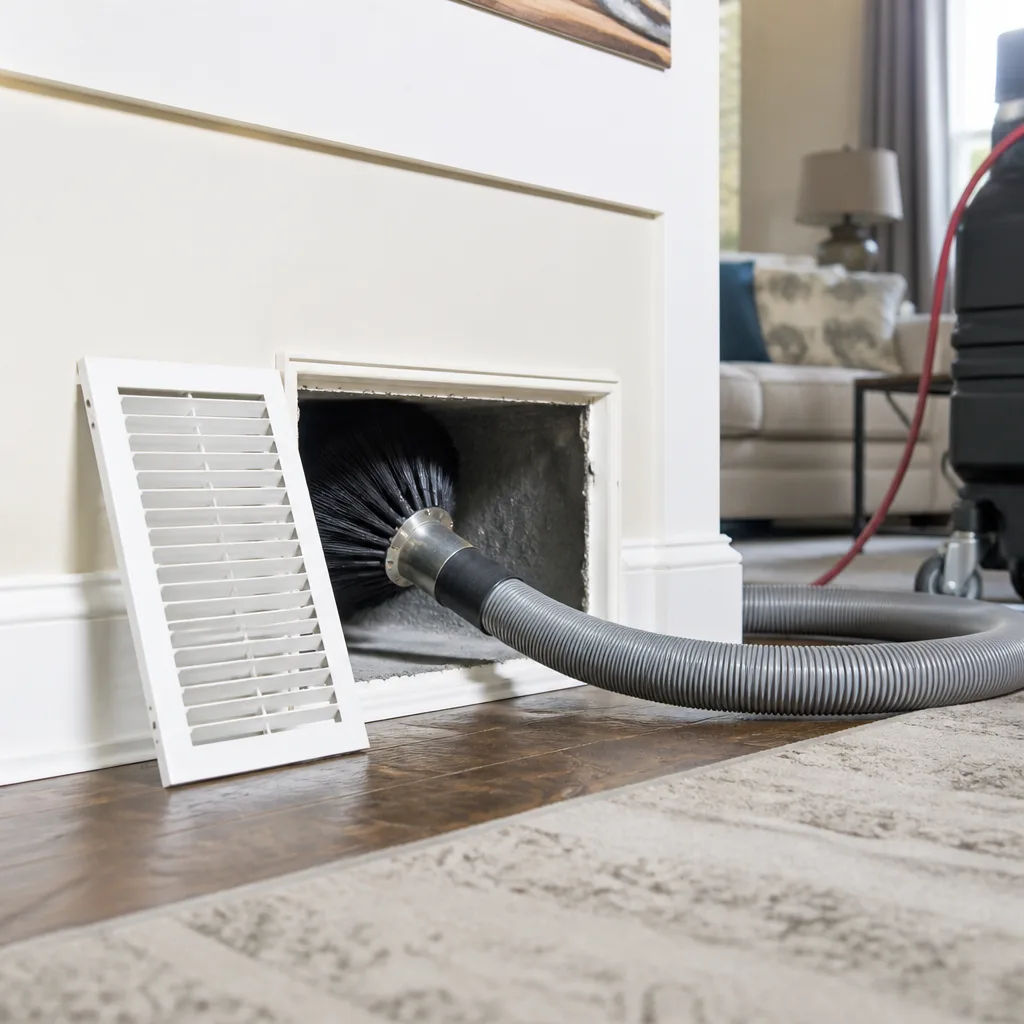
We operate Rotobrush rotary-brush systems and Nikro commercial vacuum equipment on every repair and cleaning job, which means when we open a duct system we can agitate and extract debris along the full run before we repair it. A repair on a debris-filled path is only half the fix.
Room-by-Room Diagnostic Checklist
Walk your home with the system running and work through this in order. It takes about twenty minutes and gives a technician a complete picture. Write down your findings as you go.
- Set the thermostat to heat and let the system run for five minutes. You want steady-state airflow, not the ramp-up.
- Start at the room that feels the most uncomfortable. Hold your hand at each supply register in that room and note the airflow feel: strong, medium, weak, or none.
- Listen at each register. Note any whistling, fluttering, or rattling sound and which room it’s in.
- Repeat the feel and listen test in every other room. Compare rooms of similar size directly against each other.
- Check every return grille. A return that feels weak or silent is a clue that the return path is restricted.
- Look at accessible ductwork. In the furnace closet, garage, or attic, note any visible gaps, peeled tape, cracked mastic, or sagging flexible runs.
- Find the filter and check it. If it’s visibly loaded with dust, that alone can cause the symptoms you’re chasing.
- Smell the air near the furnace closet. Any combustion smell near the furnace or a gas water heater is a stop-work condition. Turn off the system and call a professional.
- Write the map. List each room, its airflow feel, its sound, and any visible joint issue. That’s what a technician needs to start at the problem.
This checklist is what to check and what to note – it is not a how-to for repairing what you find. When the map points to a specific failure, that’s your handoff to a professional. The next section explains why the map matters as much as the repair itself.
When Does a Duct System Need Repair Rather Than Cleaning?
Cleaning and repair solve different problems, and the order matters. duct cleaning in Daly City removes accumulated debris from the inside of the ductwork. Repair fixes the structure of the duct system itself: joints, seals, connections, and physical integrity. If a system has both debris and structural failure, the debris usually has to be extracted first, because cleaning a duct through a broken joint simply spreads dust into the home.
- Clean only: airflow is even, joints are sealed, interior has visible dust buildup, no air quality complaints beyond general dust.
- Repair only: a specific register is starved, a joint is disconnected, or a run is collapsed, but the interior is otherwise reasonably clean.
- Clean and repair: the most common combination – a system with failing joints that has also accumulated dust, often in older homes where both problems have been developing quietly for years.
Post-renovation homes in Daly City almost always need cleaning first. Drywall dust, sawdust, and construction debris settle deep into accessible runs, and a repair attempted on a debris-clogged system is likely to fail because the debris loads the blower and stresses the repaired joints. That’s where Nikro extraction and Abatement Technologies containment earn their keep – a job that starts with heavy debris requires commercial-grade vacuum capacity and HEPA-level particulate control to keep the rest of the home clean.
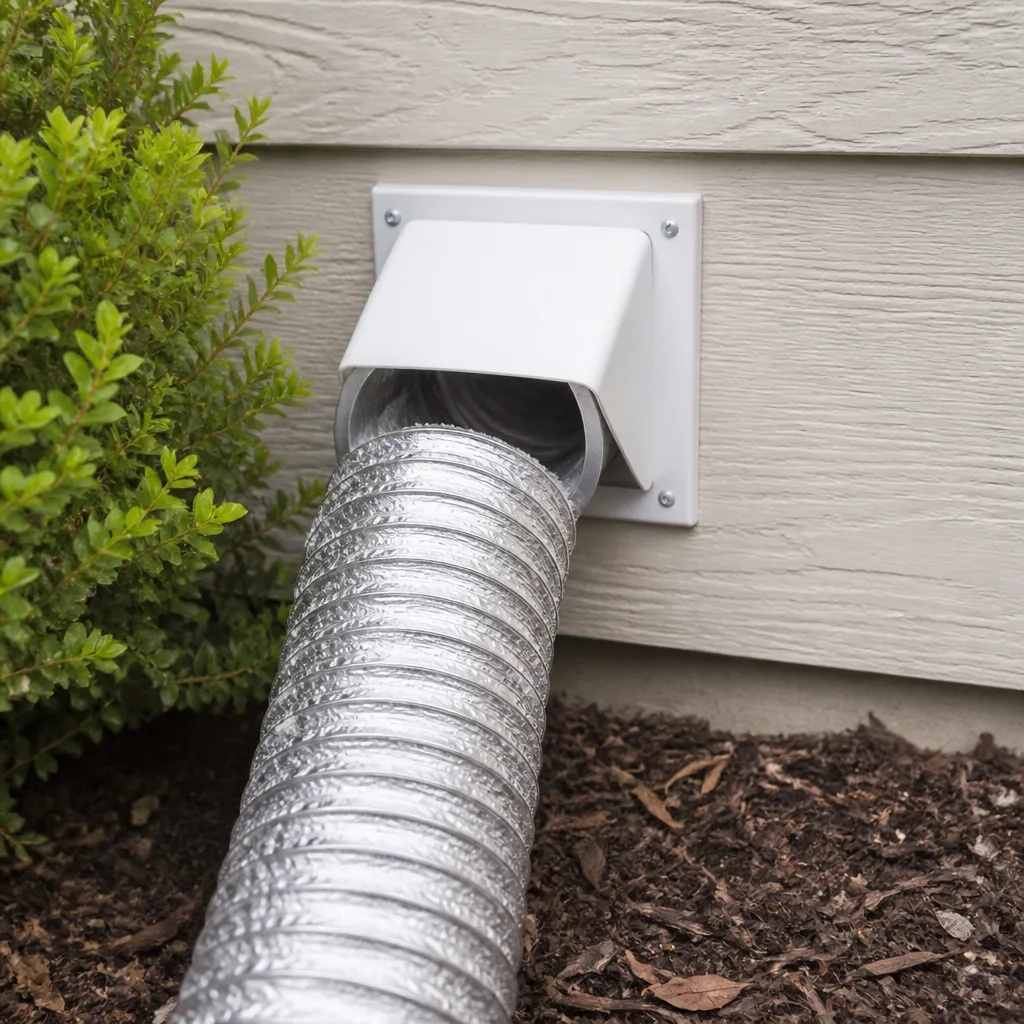
For homes with an attached dryer vent run – many Daly City homes have a vent that shares a wall or chase with HVAC ductwork – dryer vent cleaning is a separate but related job. Lint buildup in a dryer vent is a fire risk first and a maintenance item second, and a dryer vent that shares space with ductwork can be inspected during the same visit.
Common Mistakes to Avoid
- Chasing the hot room instead of the pressure. Partly closing a register to force air elsewhere raises static pressure on the whole system and stresses the blower motor. Fix the race, not the symptom.
- Taping over old tape. Fresh duct tape over failing tape from an older repair is a common fix in Westlake and Serramonte homes and it almost never holds. The failed material has to come off.
- Assuming “newer ductwork” means “no failures.” Flex duct that sags in a tight Daly City chase can collapse internally while looking fine from the outside. Read the airflow, not the jacket.
- Ignoring the return side. Most homeowners map supply registers and forget the returns. A restricted return is a pressure problem that shows up as supply-side symptoms.
- Cleaning before repairing, or repairing before cleaning. The order matters, and getting it wrong either wastes the cleaning or stresses the repair. Map the system first, then decide.
- Treating a combustion smell as a duct problem. Any combustion smell near a furnace or gas appliance is a safety stop. Turn the system off and call a professional immediately.
- Skipping the filter. A loaded filter is the most common cause of overpressure, and no repair will hold on a system that keeps fighting one.
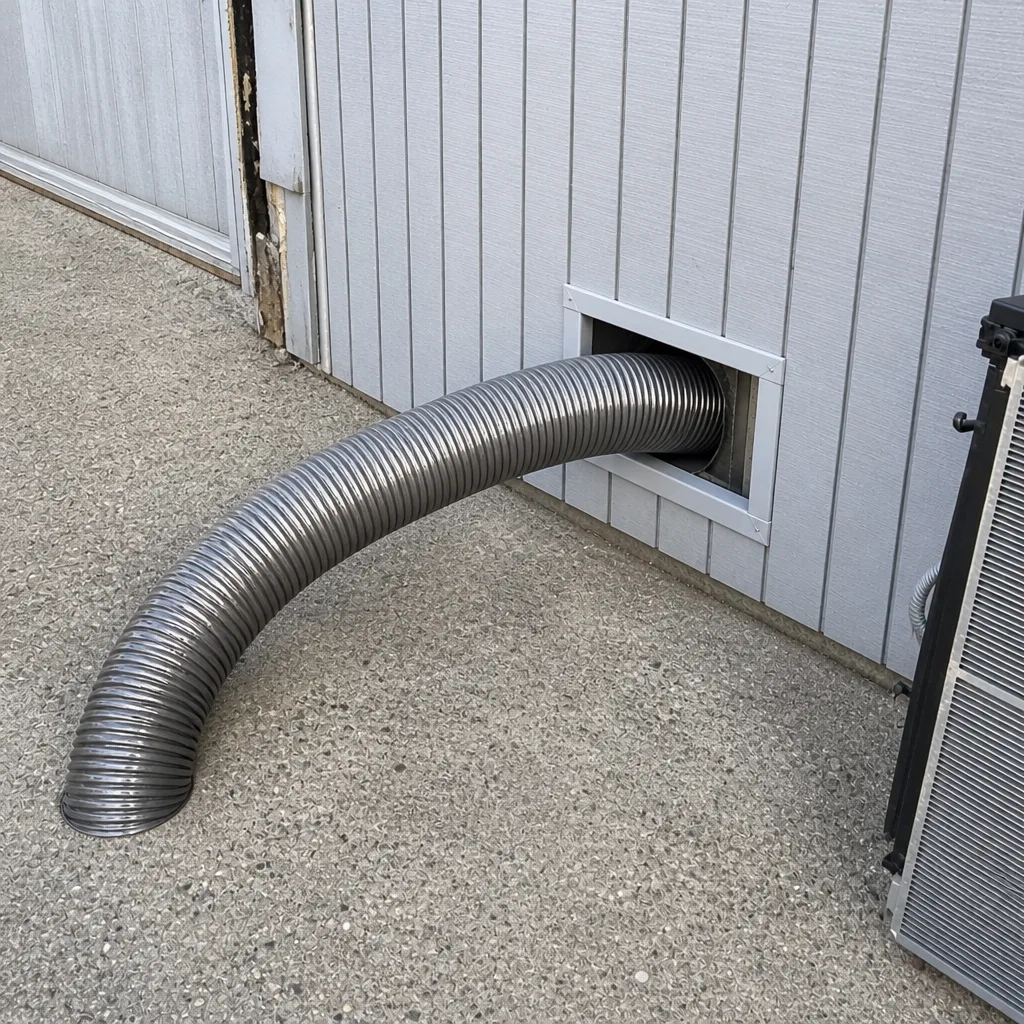
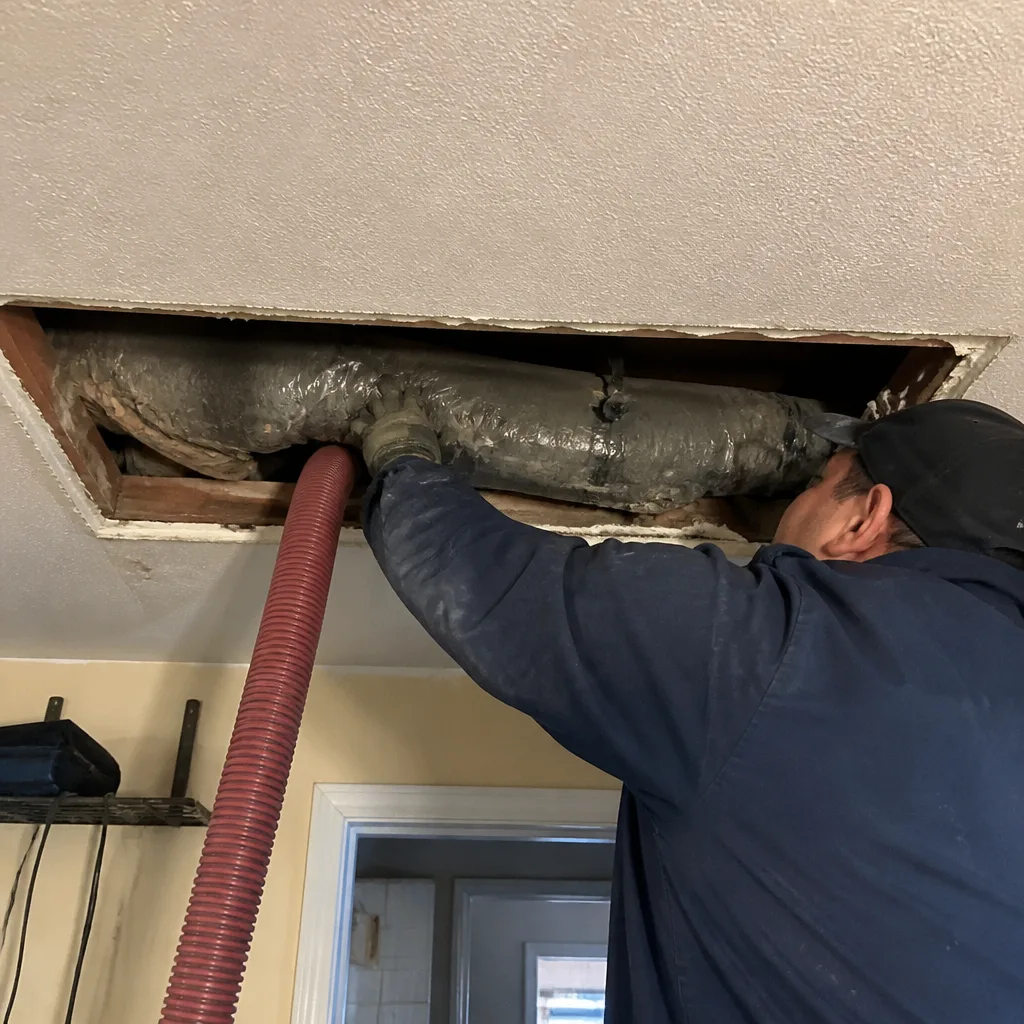
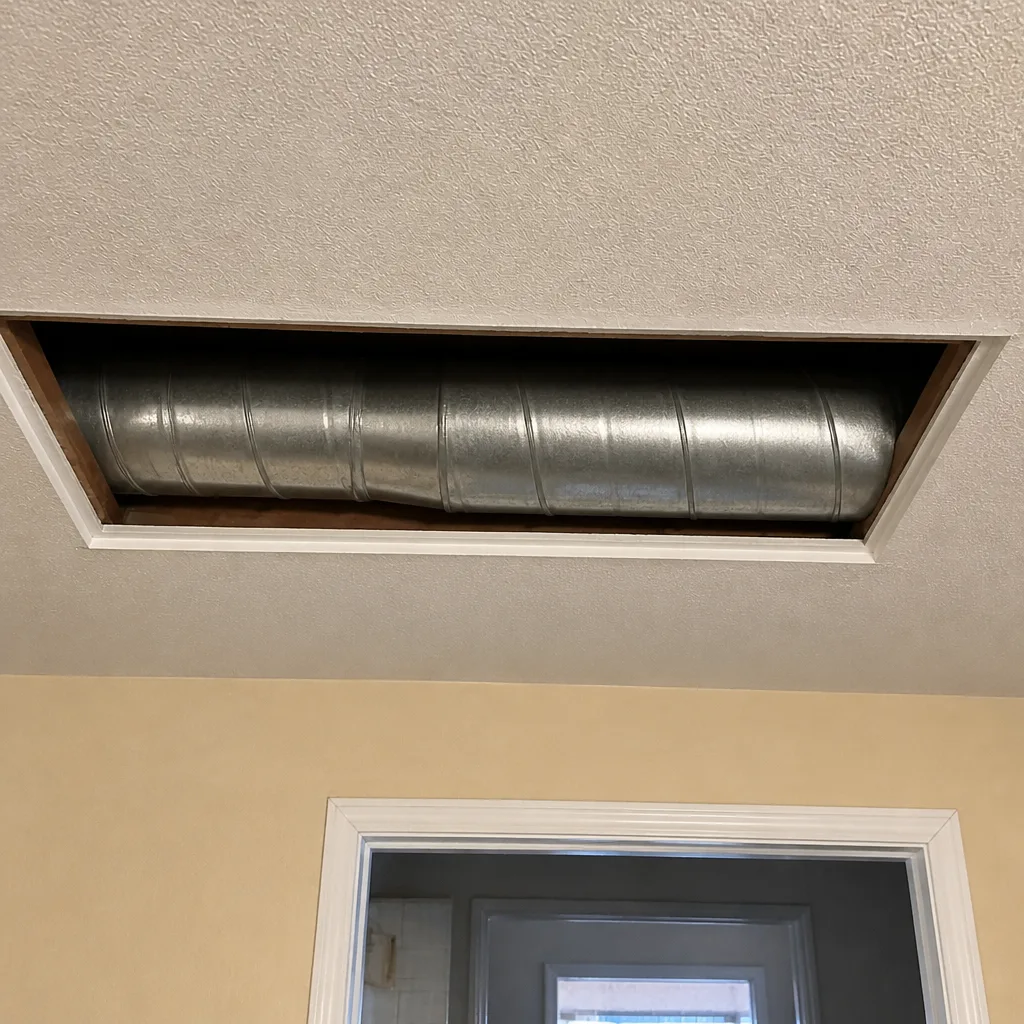
See the difference
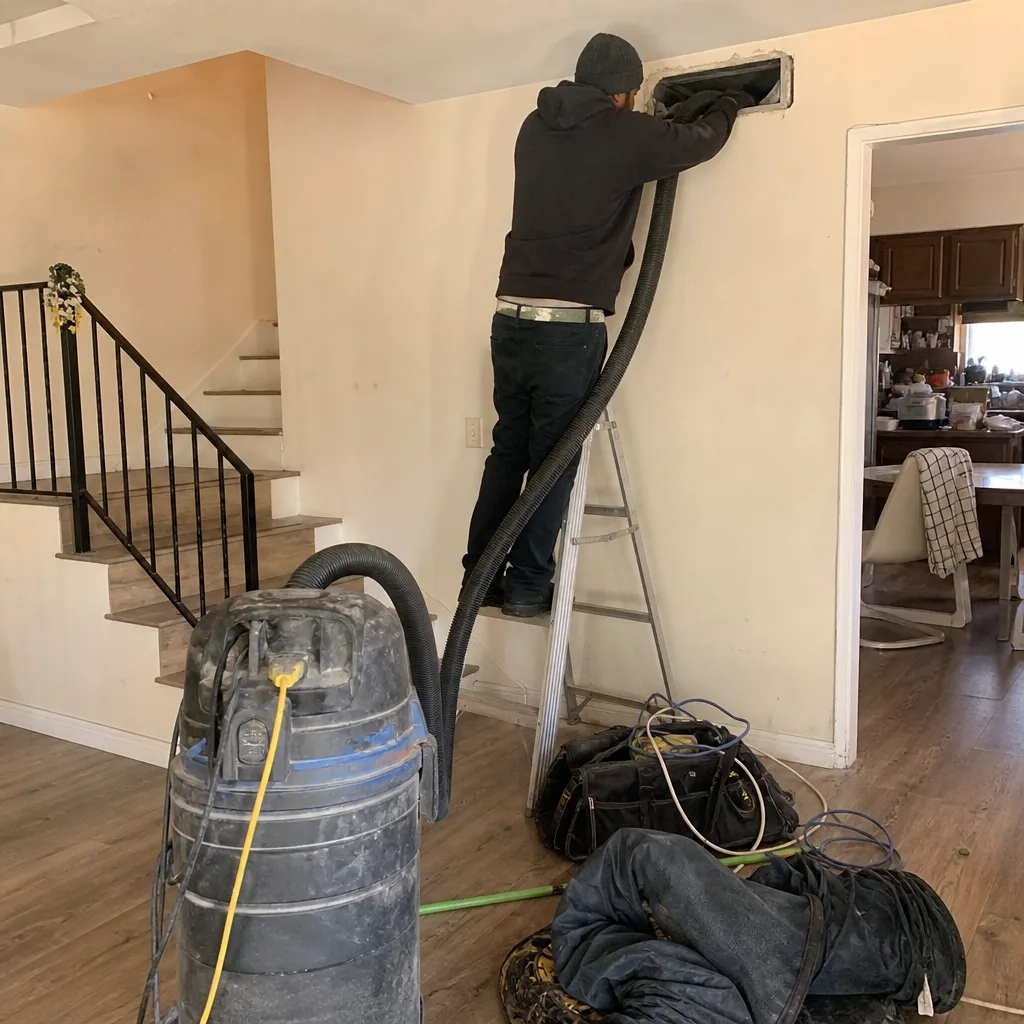 Before
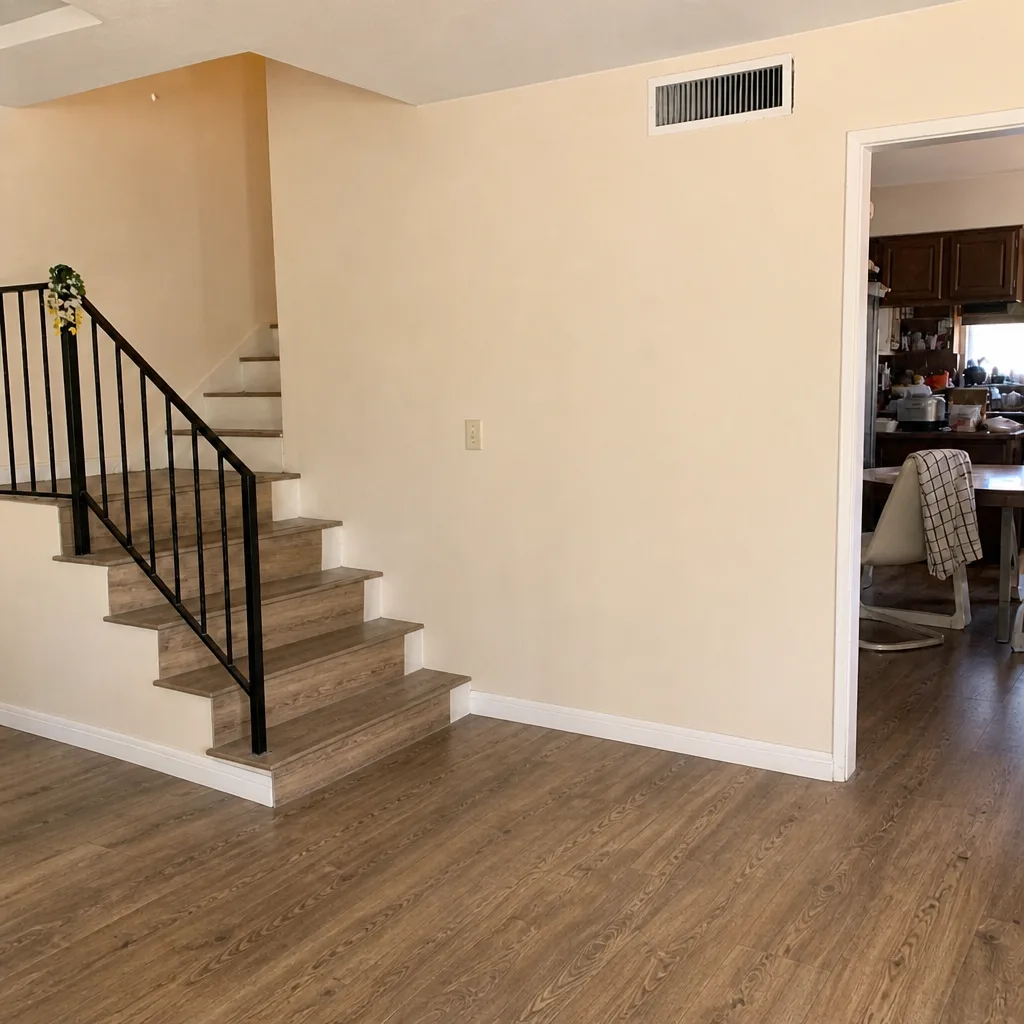 After
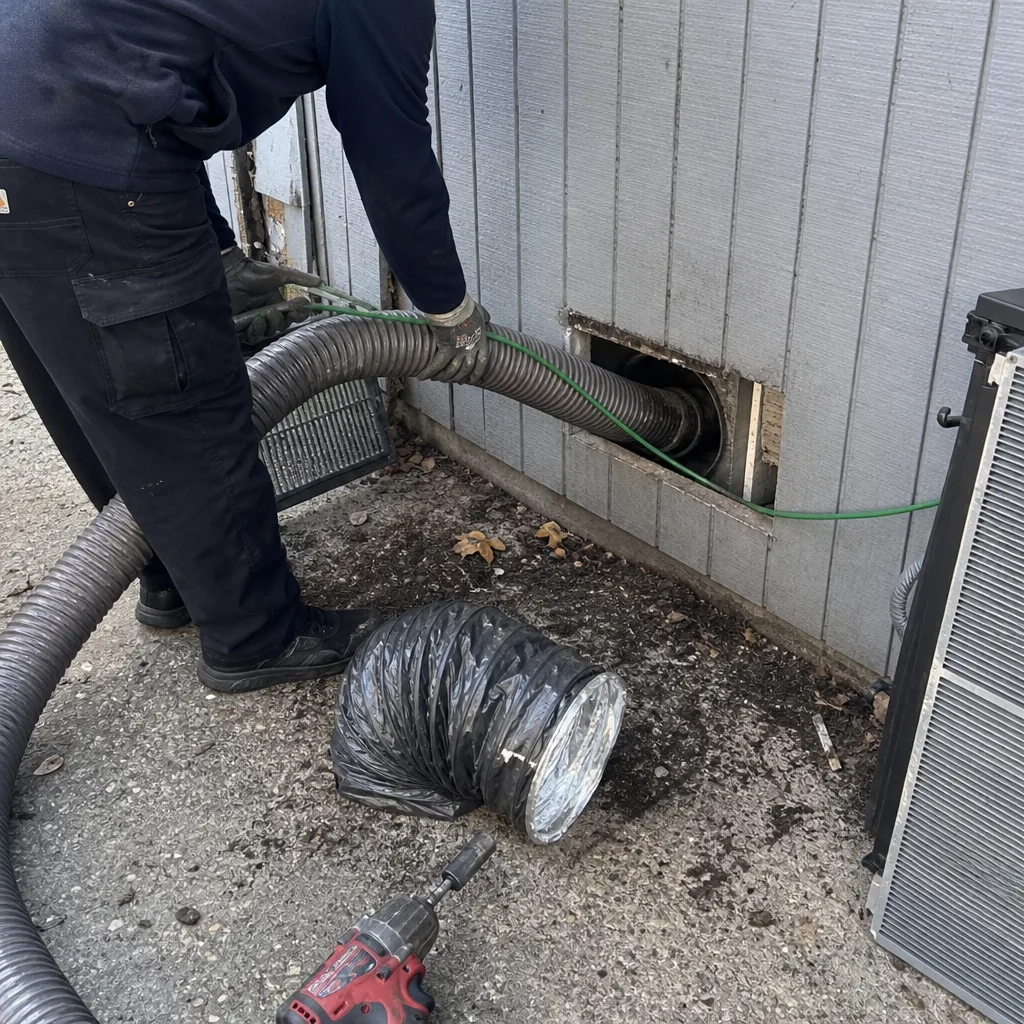 Before
 After
 Before
 After
When to Call a Professional
Call when the checklist points to a disconnected joint, a collapsed run, or any failure inside a wall, crawl space, or attic. Call when a register that used to deliver air now delivers none, or when airflow noise has changed noticeably in one area. Call when the furnace is in a closet or small utility space and any duct work near it has failed, because pressure balance near a combustion appliance is a safety matter. Call if you’ve patched a joint yourself and the symptom returned. And call if you’re unsure – the map you build on your own is exactly the starting point a technician wants. Duct Cleaning Daly City offers free estimates in Daly City – call (833) 958-9532 to schedule one. We answer 24/7, with fast dispatch from 7am to 7pm, Sunday through Friday.
Frequently Asked Questions
The price is set per job by a written estimate, because a single sealed joint and a replaced collapsed run are entirely different repairs. We don’t quote per-vent or offer a teaser price that changes once a technician arrives – the estimate you receive before work begins is the price for the work. Call (833) 958-9532 for a free estimate, and we’ll bring the checklist map you built to start at the actual problem.
A leaking duct shows up as a starved register with normal sound or a loose duct with a specific noise, while a failing blower usually shows up as reduced airflow everywhere at once plus a louder motor or a system that trips a breaker. If every room is weak, suspect the blower or a major restriction. If one area is weak and others are strong or overfed, suspect a leak or disconnected joint. Either way, call (833) 958-9532 for an exact quote – estimates are free.
Cheap quotes often cover only the visible tape-and-go patch, not the underlying cause. We’ve seen systems where a low-ball repair re-taped a failing joint without addressing the filter overpressure that caused it, and the joint failed again within a season. Our equipment list is part of the answer: Rotobrush and Nikro tools mean we can clear the run before repairing it, so the repair holds. We confirm the written estimate before work starts, and we take before-and-after photos so you know exactly what was fixed.
There’s no fixed schedule – it depends on the age of the system, the housing stock, and whether filtration is under control. Older Westlake-era and Serramonte-era homes with original mastic and tape tend to need joint repairs more often than newer systems, and homes with chronically loaded filters need repair more frequently because the filter keeps stressing the joints. An inspection during routine air duct cleaning catches failures early. Call (833) 958-9532 to schedule an inspection.
Yes, and often that’s the right order – clear the debris first with commercial extraction, then repair the joints so the repair isn’t under stress from a loaded system. Our Abatement Technologies containment capability keeps dust out of your living space during the work, which matters most for allergy sufferers and post-renovation cleanups. We work with Honeywell and Aprilaire filtration products if the filter system needs an upgrade at the same time. Call (833) 958-9532 for a free estimate.
Most duct problems aren’t dangerous on their own, but a pressure change near a gas appliance can create a combustion backdraft risk that has no smell and no obvious sign. That’s why we check the combustion appliance zone on any repair near a furnace closet or gas water heater. If you ever do smell combustion near the furnace, turn the system off and call a professional immediately. For non-emergency evaluation and a free estimate, call (833) 958-9532 – we answer 24/7, with fast dispatch from 7am to 7pm, Sunday through Friday.
The Bottom Line
Duct troubleshooting starts with reading the system, not the symptom. Feel the airflow at every register, listen for the sound of a failing joint, and look at what’s accessible before you touch anything. Sealing failures, collapsed runs, and disconnected joints each reveal themselves differently, and mixing them up wastes time and money. Daly City’s mild, humid climate and older housing stock make mastic degradation and sagging flex runs the two most common failures here. Map your system room by room, know where the safety lines are, and let a professional handle anything past tape delamination on an accessible joint. Clean ducts and repaired ducts belong together – and the written estimate should always come before the work.
About Duct Cleaning Daly City
We provide three services under one roof: air duct cleaning, air duct repair, and dryer vent cleaning. Our technicians use Rotobrush rotary-brush systems and Nikro commercial-grade vacuum equipment – the same machinery restoration and abatement professionals rely on – and we use Abatement Technologies equipment for HEPA-level particulate containment during the work. We work with Honeywell and Aprilaire air-quality products, and our toolkit includes Guardsman-brand finishing products. Our technicians have up to 10 years of experience. Duct Cleaning Daly City works with independent local professionals who perform the work.
Ready to start at the problem instead of from scratch? Call (833) 958-9532 for a free estimate in Daly City. We answer 24/7, with fast dispatch from 7am to 7pm, Sunday through Friday.
Written by the team at Duct Cleaning Daly City.