
Last updated November 16, 2026
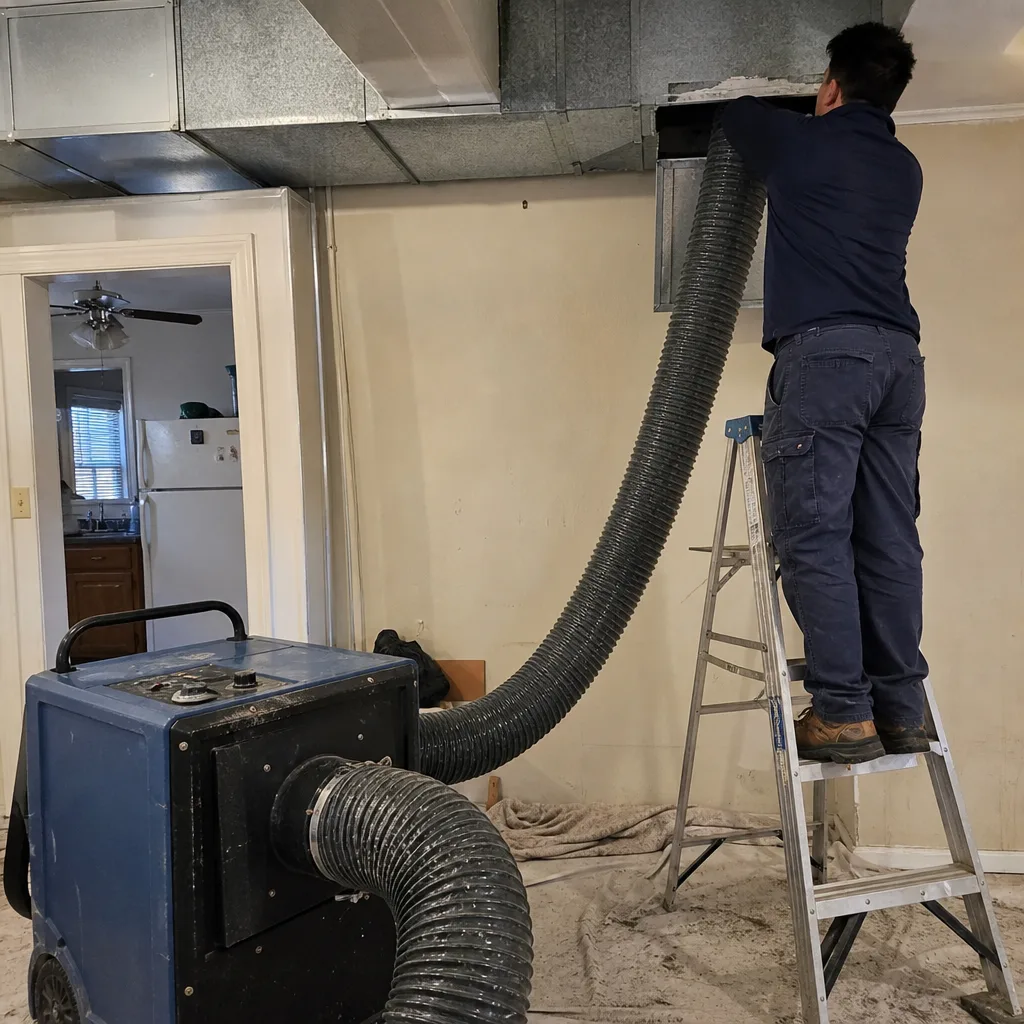
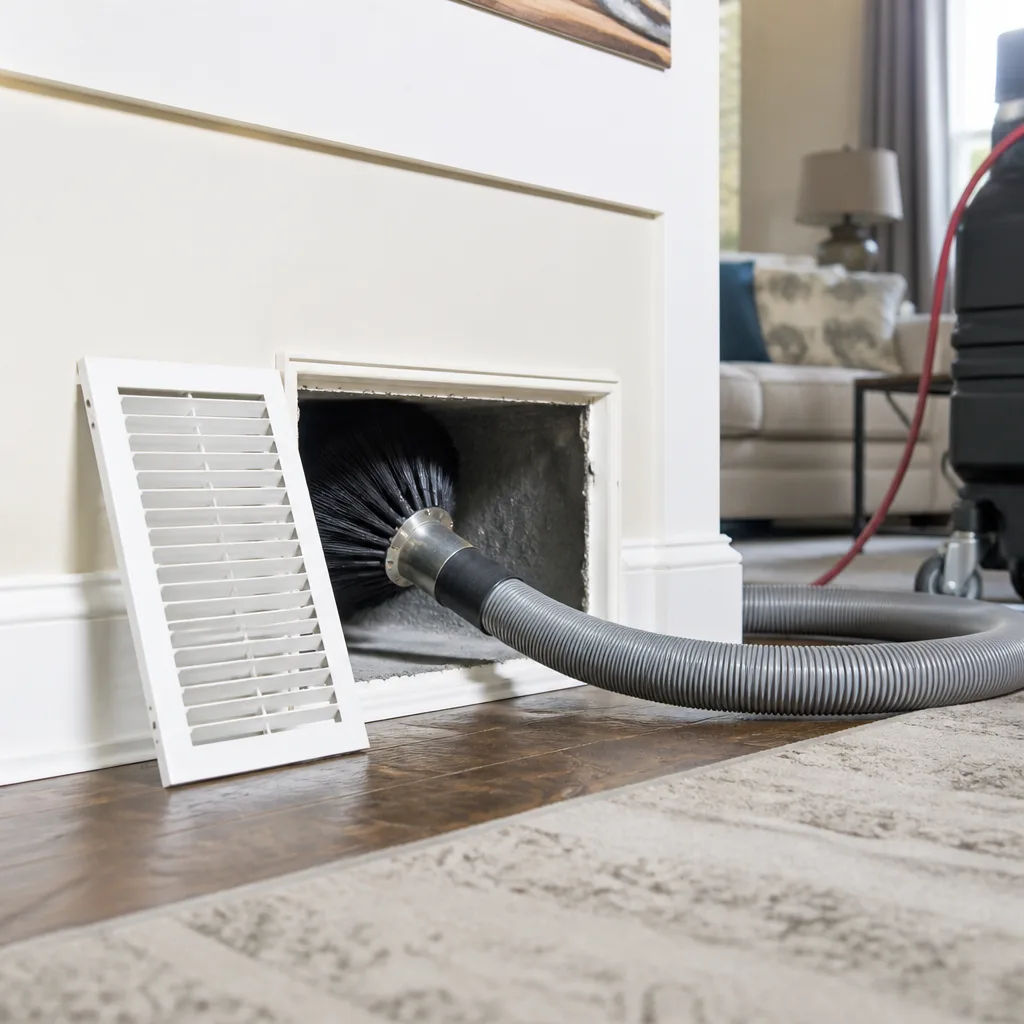 Whole-home duct cleaning
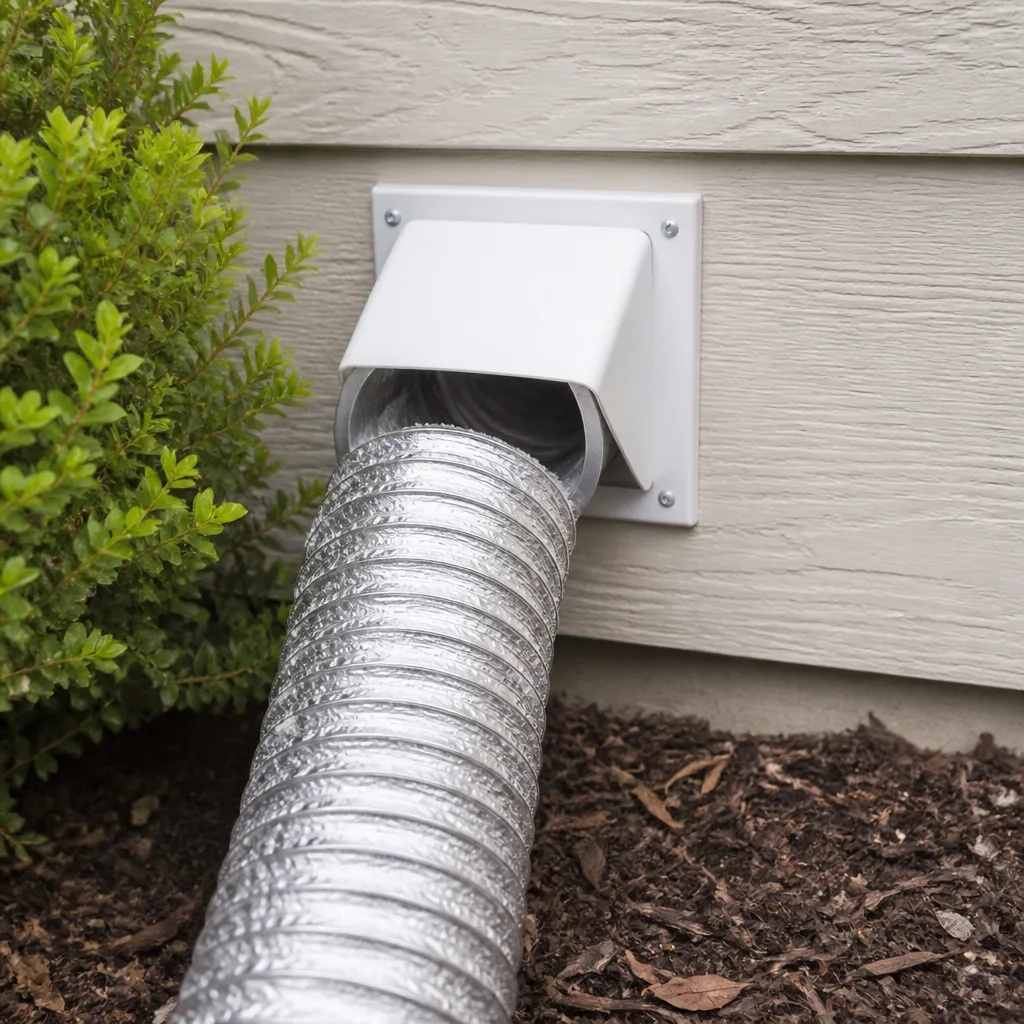 Dryer vent cleaning
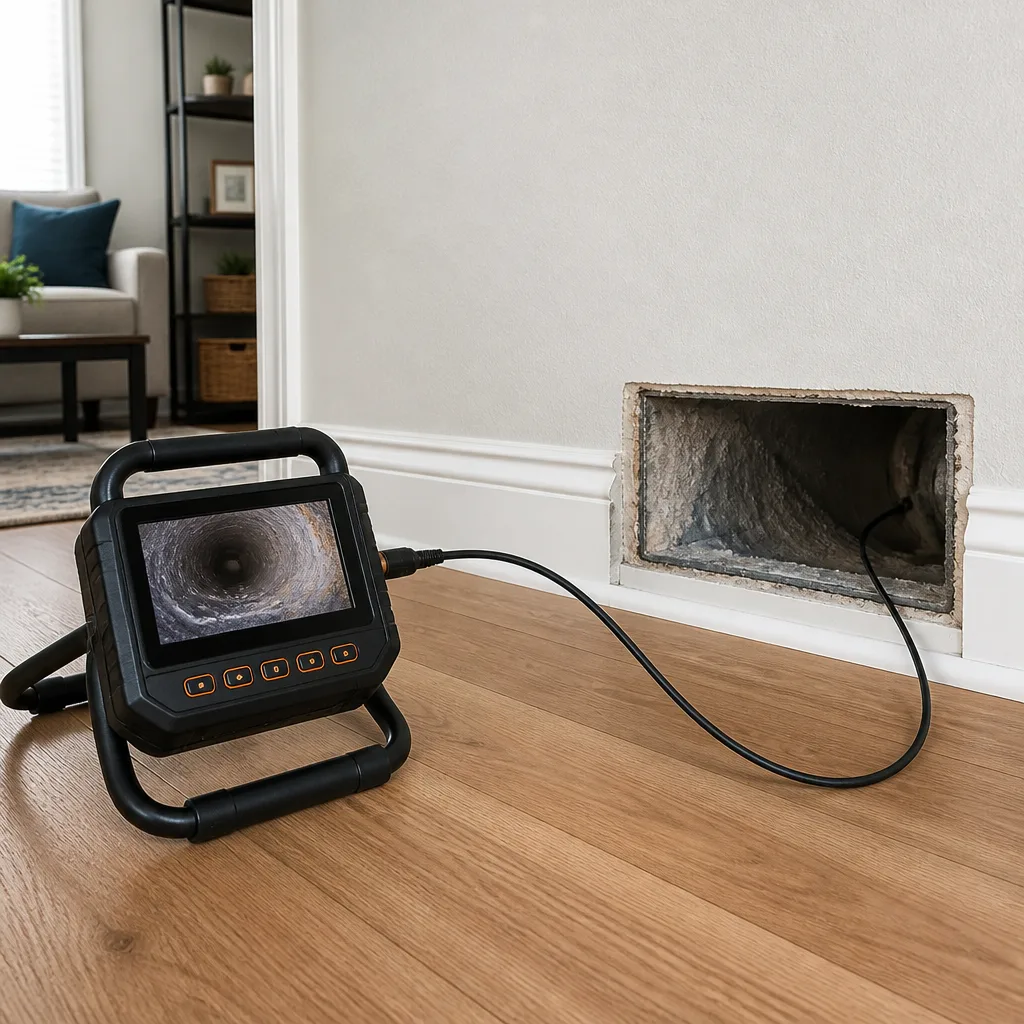 Camera inspection
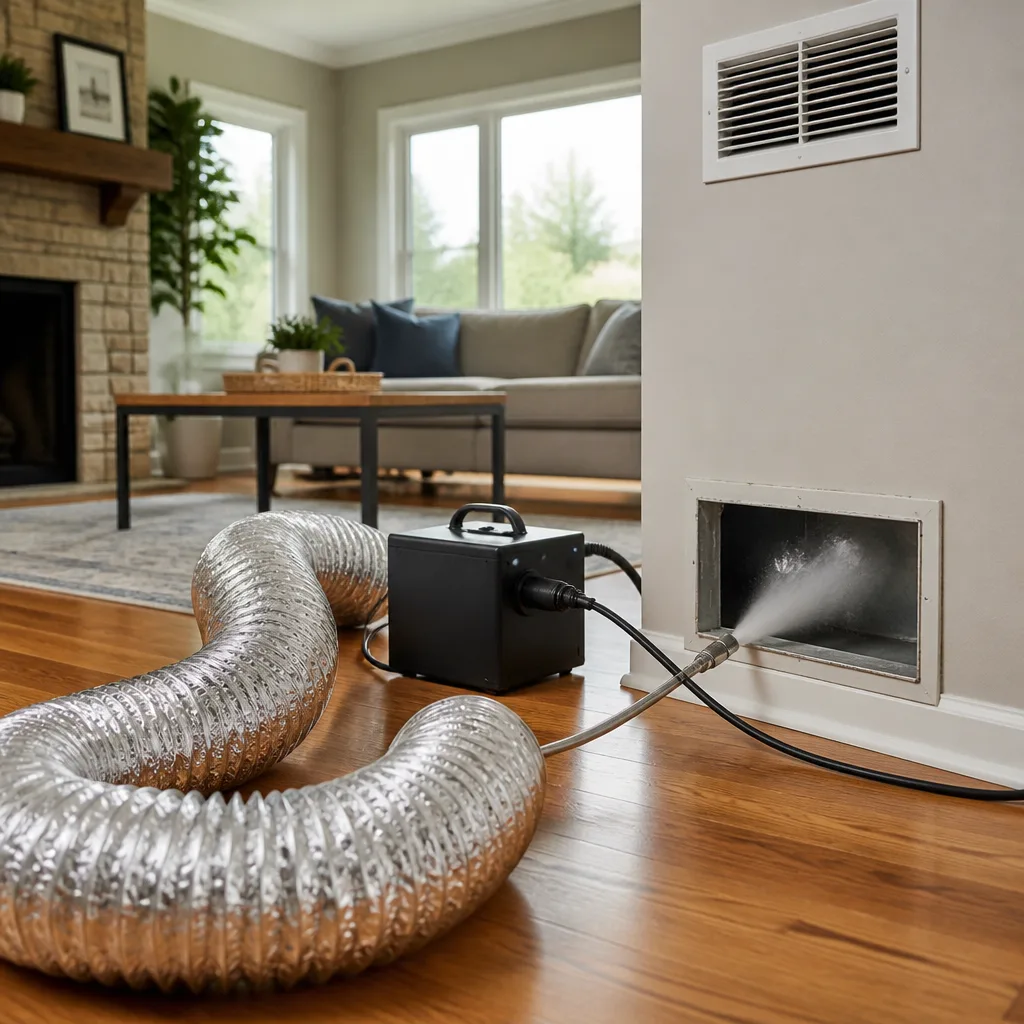 Sanitizing & deodorizing
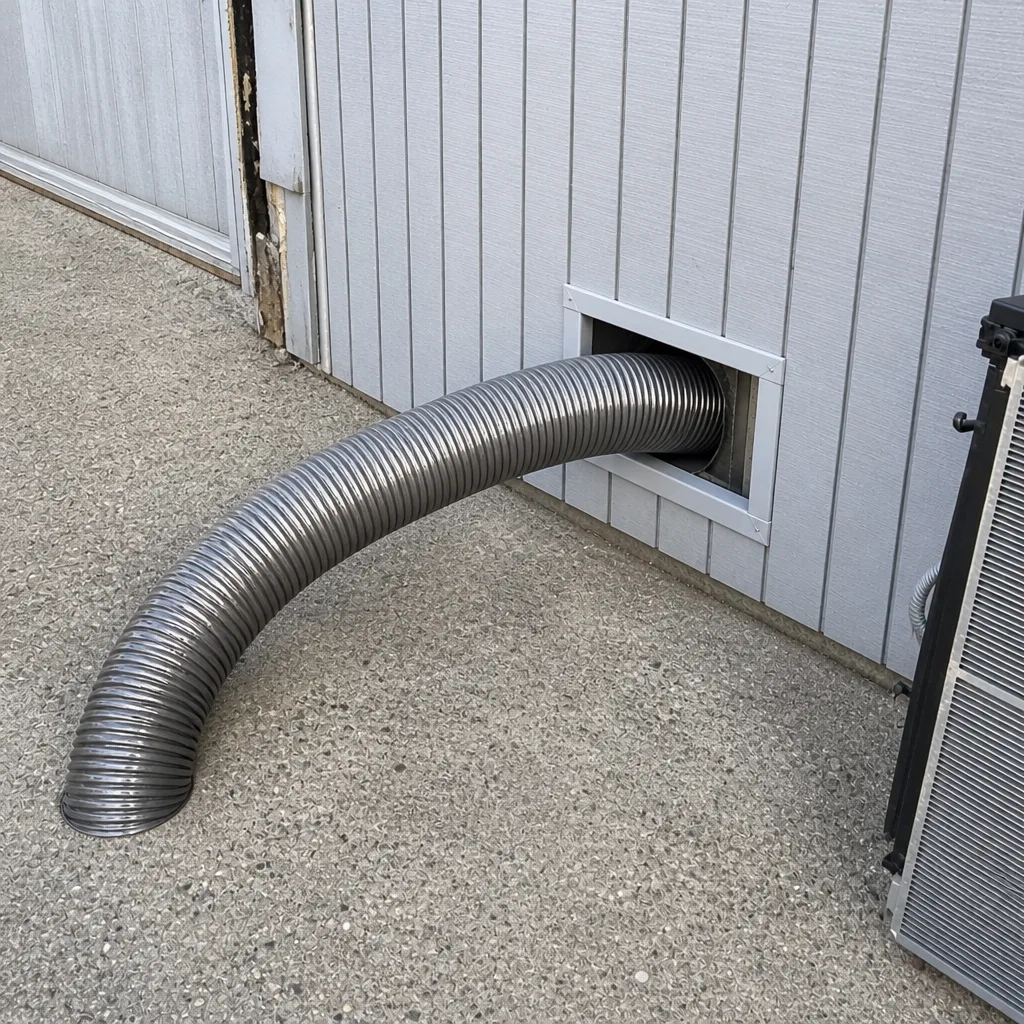
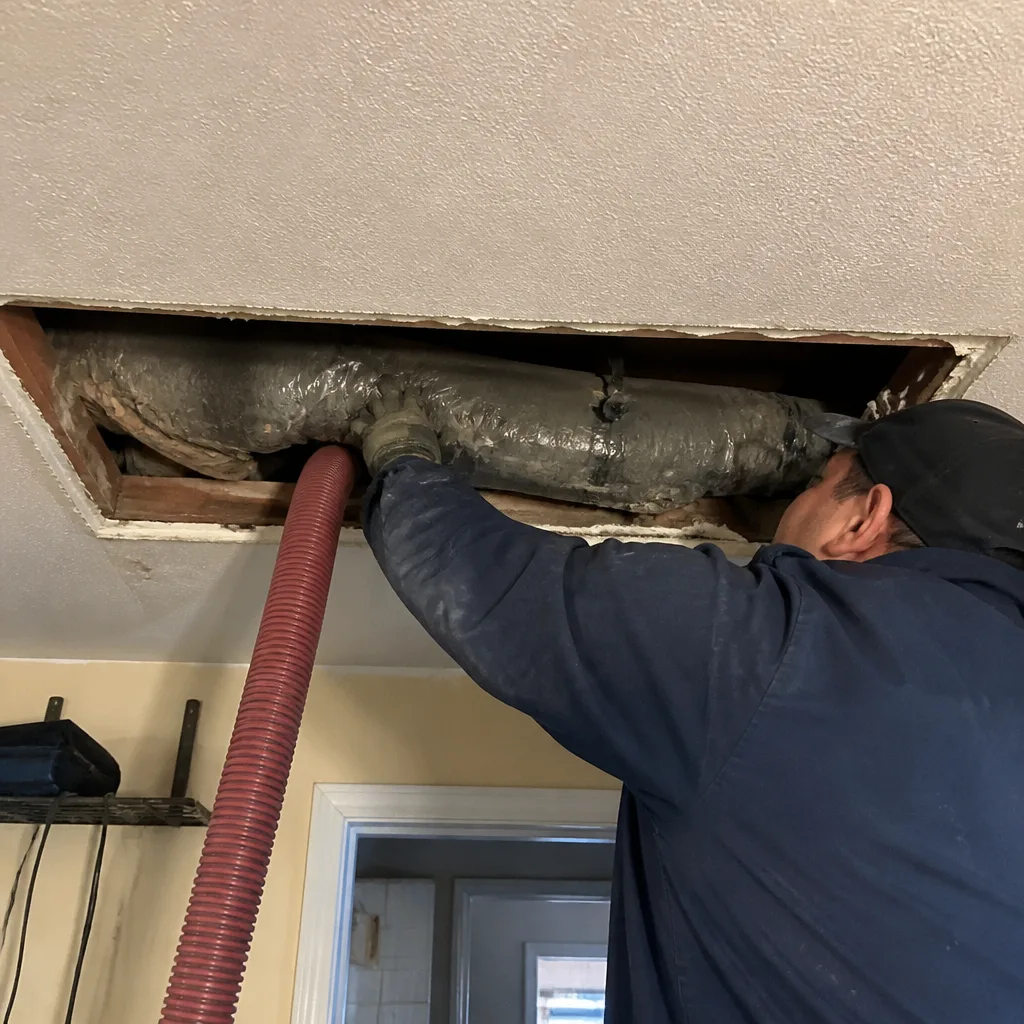
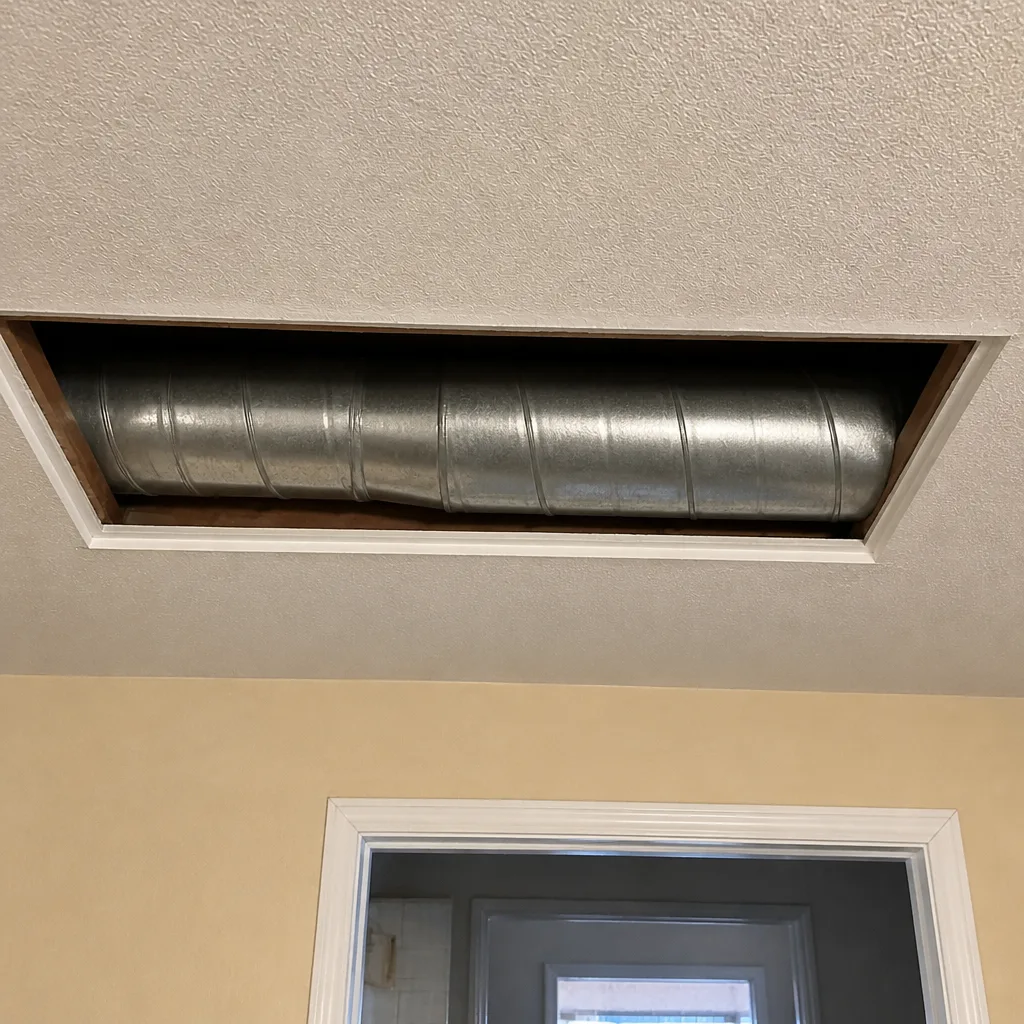
Whole-system duct and dryer vent check with before-and-after photos - you see exactly what came out of your vents
That "$99 whole-house special" is a bait ad - the real number appears once they are in your hallway, or the "clean" is a shop-vac at the register. We photograph the inside of your ducts before and after instead.
DIY vs Professional Air Duct Cleaning: The Daly City Homeowner’s Decision Guide
Here’s the part most DIY duct cleaning advice leaves out: the machine is the whole argument. A truck-mounted vacuum system pulls negative pressure in the range of 3,000 to 5,000 CFM. The best consumer shop-vac you can rent or buy generates roughly 150 CFM. That’s not a gap you close with a longer hose and an extra Saturday. It’s a physics problem, and no amount of effort solves it. This guide draws a clear line between what you can genuinely handle yourself in a Daly City home and the work that only a properly equipped crew can complete, so you spend your time and money where they actually produce cleaner air.
Quick Answer
Consumer-grade equipment can’t generate enough negative pressure to extract compacted debris from duct linings, which means DIY duct cleaning usually disturbs contamination rather than removing it. Professional cleaning with rotary-brush agitation and commercial HEPA-level vacuum equipment gets the material out, and includes camera inspection before and after so you can see the difference. DIY maintenance between professional cleanings (grille wiping, filter changes, flashlight inspections) is worth doing; DIY duct cleaning of the duct interior is not.
Styles & brands we work with
- Whole-home duct cleaning
- Dryer vent cleaning
- Camera inspection
- Sanitizing & deodorizing
Table of Contents
- Why Airflow Numbers Decide This Argument
- What Daly City Homeowners Can Legitimately Do Themselves
- When DIY Attempts Make Contamination Worse
- The Real Cost Comparison: Rental, Time, and Incomplete Results
- How a Professional Duct Cleaning Actually Works
- How to Tell If a Previous Cleaning Was Incomplete
- Daly City Home Factors That Change the Equation
- When to Call a Professional
Why Airflow Numbers Decide This Argument
CFM means cubic feet per minute, and it describes how much air a vacuum moves. Static pressure describes how hard it can pull against resistance. Those two numbers together determine whether debris leaves a duct or just gets pushed around inside it. A 15-foot flex run with a couple of bends offers real resistance, and a shop-vac rated at 150 CFM loses most of its already-small capacity to hose friction and the pressure drop across its filter.
A professional truck-mounted system connects directly to the main trunk line and puts the entire duct system under strong negative pressure while a technician works a rotary brush through the branch runs. The brush physically agitates what’s stuck to the duct lining, and the vacuum carries it out. Neither tool does the job alone. The machine has to be big enough to hold extraction while the brush loosens material.
Here’s how the equipment classes compare on the numbers that matter:
- Truck-mounted vacuum systems: roughly 3,000 to 5,000 CFM of negative pressure. Built for whole-system extraction. This is what professional duct cleaning services use on the main line.
- Commercial portable units: several hundred to a few thousand CFM depending on the model, still with proper HEPA filtration and containment. We run Nikro commercial-grade vacuum equipment, the same brand specified by remediation contractors, because a job that moves contamination needs industrial extraction.
- Consumer shop-vacs: roughly 150 CFM at the motor, less at the end of a hose. Adequate for vacuuming crumbs off a floor. Not adequate for compacted dust, lint, and debris fused to the inside of a 15-foot flex duct.
The static pressure story is the same in reverse. A shop-vac’s small motor stalls out against a long, restrictive duct run. A commercial unit holds pressure across the whole system. That’s why a homeowner with a shop-vac often sees dust puff out of a supply register while they’re working, the material is being displaced, not captured. For a fuller picture of what the professional version of this job involves, see our air duct cleaning page.
What Daly City Homeowners Can Legitimately Do Themselves
DIY isn’t useless. It’s just misdirected when people point it at the inside of the duct system. The maintenance tasks that actually preserve air quality in a Daly City home are the ones that keep a professionally cleaned system clean. These are real, worth doing, and they don’t require special equipment.
- Wipe and vacuum the supply and return grilles. Grilles collect dust on the face and in the slats. A damp cloth and a vacuum brush attachment handle this entirely. Do it whenever the grille looks dull, and the airstream coming through stays cleaner.
- Vacuum accessible boots and register openings. The short section of duct between the floor or wall and the main line, sometimes reachable on a return, can be vacuumed with a shop-vac and a crevice tool. You’re cleaning the entrance, not the pipe.
- Change filters on the schedule your system calls for. A loaded filter is the single most common reason airflow drops in a home. Check it monthly during heavy heating or cooling season and replace it when it looks gray. Cheap maintenance, real effect.
- Inspect visually with a flashlight. Remove a grille, shine a light down the boot, and look at what’s visible. Dust streaks, dark staining, or visible debris are reasons to call. A little surface dust is normal.
- Keep the return grilles unobstructed. Furniture, rugs, or boxes pushed against a return choke the system and increase the dust that settles everywhere else.
That’s the honest list. Notice none of it involves a brush inside the duct. When homeowners ask us what they can safely do between professional visits, this is the answer we give, and it applies to a home in Westlake as much as one in Original Daly City.
When DIY Attempts Make Contamination Worse
DIY becomes actively counterproductive in specific situations, and it’s worth knowing them before you start. The pattern is always the same: a home attempt disturbs contamination without the suction or containment to capture it.
You disturb mold without capture containment
If there’s visible mold growth inside a duct or on a register, brushing or vacuuming it with consumer equipment sends spores into the airstream and out into the room. Professional cleaning uses HEPA-level containment during extraction. Our crews work with Abatement Technologies equipment for exactly this reason, it holds particulates during the job rather than releasing them into the house. Disturbing an active colony with a shop-vac is a bad trade.
You dislodge debris into supply registers
A brush run through a duct without enough suction behind it pushes loosened dust toward the far end, where it collects at a register and blows into the room. You’ve moved the problem, not removed it. Without whole-system negative pressure, the debris has nowhere to go but out.
You puncture aging flex duct
The thin inner liner of flex duct tears easily. A rotary brush or an improvised cleaning tool turned by hand in an older duct can poke through the liner, and a punctured liner leaks air into wall cavities and attic spaces. That leak is worse than the dust you were chasing, and it means a repair job on top of a cleaning job.
You force debris into the blower or coil
Loose material knocked toward the air handler can load up the evaporator coil or the blower wheel. A fouled coil costs far more to resolve than a routine cleaning. This is one of the quieter ways a DIY attempt ends up costing more than the professional job it was meant to replace.
The Real Cost Comparison: Rental, Time, and Incomplete Results
DIY always looks cheaper on the receipt. When you add up the full picture, the gap narrows, and the risk side of the ledger is where DIY loses. Air duct cleaning in Daly City is priced per job by written estimate, so the honest comparison isn’t “rental cost versus cleaning cost,” it’s “total cost of the DIY path versus a single professional visit that includes inspection.”
Here’s what the DIY path actually involves once you’re honest about it:
- Equipment rental: a shop-vac strong enough to be worth using, plus a hose kit, brush attachment, and filter bag. Daily rental adds up, and none of it reaches professional CFM ratings.
- Time: a full weekend, realistically, for a house with multiple registers and returns, and the result is still limited by the machine.
- Supplies: filters, drop cloths, sealant for anything you take apart, and a replacement for the liner you may have torn.
- Incomplete results: no camera inspection, no way to confirm what was actually removed, and a meaningful chance the ducts are still loaded after you’ve spent the effort.
- Redo: a professional cleaning afterward to finish the job, because the DIY attempt disturbed material it couldn’t extract.
Compare that against a professional job that starts with a camera inspection, puts the system under real negative pressure, agitates duct linings with a rotary brush, extracts the loosened material with commercial equipment, and ends with a second camera pass and photos. One visit, verifiable result. When homeowners ask how much air duct cleaning actually costs in Daly City, we give a whole-system estimate for their specific layout rather than a teaser number, and the written estimate is what sets the price. Call (833) 958-9532 for an exact quote, estimates are free.
How a Professional Duct Cleaning Actually Works
Understanding the sequence helps you judge any quote you receive, from us or anyone else. A properly equipped cleaning follows a clear order, and a crew that skips steps tells you something about the result.
- Inspection first. A camera pass through the main line and accessible branches establishes what’s actually there: dust load, debris, moisture, mold, damaged liner. No two Daly City homes are the same here, so no honest estimate starts without a look.
- Containment and vacuum connection. The commercial vacuum connects to the main trunk line and puts the whole system under negative pressure. HEPA-level containment keeps loosened material from escaping into the living space.
- Mechanical agitation. A rotary-brush system runs through the branch runs, physically scouring what’s bonded to the duct lining. This is the step a shop-vac simply cannot perform. We run Rotobrush rotary-brush systems because mechanical agitation is what frees compacted debris; suction alone leaves it clinging.
- Extraction. The loosened material travels to the commercial vacuum and out of the house. High-CFM equipment holds pressure throughout.
- Register and boot cleaning. Grilles, boots, and returns get cleaned by hand to match the duct interior.
- Post-cleaning camera inspection. A second pass confirms the result. We photograph before and after so you can see what was actually removed, no guessing.
- Repair and filtration check. If the inspection turns up damaged liner, disconnected joints, or leaks, repair follows cleaning. That’s a core part of what we do, and it’s why we offer duct repair alongside cleaning. We also work with Honeywell and Aprilaire air-quality systems for whole-home filtration, so a system can be improved, not just cleaned.
Two visits sometimes make sense for a heavily loaded system, but a standard cleaning is a single scheduled appointment. Fast dispatch from 7am to 7pm, Sunday through Friday, and we answer 24/7.
How to Tell If a Previous Cleaning Was Incomplete
Plenty of homeowners come to us because a cleaning they paid for didn’t seem to work. Oftentimes it didn’t, and the evidence shows up in a few specific places. Here’s how to check, whether you had the work done recently or you’re trying to decide if a DIY attempt did anything at all.
- Camera inspection findings. A post-cleaning camera pass should show a clean duct interior with no visible debris or liner damage. If the crew didn’t inspect before or after, you have no way to know what happened inside. Ask for the photos.
- Filter loading rate. Watch how fast your furnace or air handler filter loads up after a cleaning. A filter that’s dark within a couple of weeks is a sign the ducts are still shedding debris. A properly cleaned system loads slowly.
- Airflow at registers. Hold a piece of tissue to a supply register. Weak or uneven flow can indicate a disconnected joint, a collapsed liner, or debris still blocking a run, problems a cleaning should have surfaced.
- Dust settling soon after. If surfaces get a fresh film of dust within days of a cleaning, the ducts probably still hold material. A real clean keeps the visible dust down for far longer.
- No documentation. A legitimate job includes before-and-after photos of your own ducts. No photos, no proof.
If a previous job comes up short on any of these, a second inspection tells you where things actually stand. We check with a camera before quoting any follow-up work, and the flat price for the job is agreed before work begins. Our technicians have up to 10 years of experience reading exactly this kind of evidence.
Daly City Home Factors That Change the Equation
Some of what makes duct cleaning decisions different here comes down to the housing. Daly City’s housing stock includes a lot of older single-family homes and post-war subdivisions, many of them with the original rigid and flex ductwork still in place. That matters for two reasons. First, older duct systems often have more accumulated debris from decades of use. Second, and this is the DIY trap, older flex duct has a worn inner liner that tears easily under a rotary brush turned by someone without the training to sense the resistance.
The other factor is the climate. Winters here are mild, which means heating runs intermittently rather than hard, and that slower circulation lets dust settle and compact in the duct linings instead of blowing through continuously. Compacted debris is exactly what consumer equipment can’t lift. A shop-vac against a hard-packed dust layer inside a 15-foot run produces a faint show of dust and no real extraction.
Mild, damp stretches also create conditions where moisture can linger in poorly ventilated areas of a duct system. That’s a reason to look, not to guess. A camera inspection tells you whether an issue is dust, moisture, or something that needs repair before cleaning, and that’s a judgment call worth having a professional make. We see all of this across neighborhoods like Serramonte, St. Francis Wood, and Broadmoor, and the answer always starts with the inspection. For local service details, our Daly City page covers the basics. And if you’re due for a dryer vent cleaning, that’s a separate job with its own fire-safety stakes, worth booking at the same time.
Common Mistakes to Avoid
- Renting a shop-vac and calling it duct cleaning. At roughly 150 CFM, it can’t generate the negative pressure to lift compacted debris. You’ll stir up more than you remove.
- Skipping the pre-cleaning camera inspection. Without it, nobody knows what’s inside the ducts, and repair needs get missed entirely. A quote given without a look is a guess.
- Brushing aging flex duct without training. The inner liner on older Daly City flex runs tears easily, and a punctured liner means a repair on top of your cleaning.
- Cleaning ducts but ignoring disconnected joints and leaks. Clean ducts that leak at the boot dump air into wall cavities instead of into the room. Repair is part of the job, not an add-on.
- Using the cheapest quote as the deciding factor. A low teaser price that grows once the crew is on site, or a job that never included proper extraction, costs more in the end. Ask what equipment they use and whether photos are included.
- Cleaning the ducts and forgetting the filter. A loaded filter chokes airflow and undoes the benefit. Replace it around your professional cleaning and on your system’s schedule afterward.
- Ignoring the dryer vent. Lint buildup in the dryer vent is a fire risk, not a maintenance afterthought, and it deserves the same professional treatment as your ductwork.
When to Call a Professional
DIY maintenance is right for keeping a clean system clean. Professional cleaning is right for getting it clean in the first place, and for these specific situations:
- You haven’t had the ducts cleaned and the home is more than a decade old.
- You recently renovated, and drywall dust and debris are in the system.
- Someone in the home has allergies or asthma and you want HEPA-level containment during the work.
- You bought a home in Daly City and don’t know the history of the ductwork.
- You see visible mold, moisture, or damage during a flashlight inspection.
- You tried a DIY cleaning and the dust returned within days.
- Your dryer vent hasn’t been cleaned in years and lint is building up.
We offer duct cleaning in Daly City and free estimates, with the flat price per system agreed in writing before work starts and before-and-after photos of your ducts. Call (833) 958-9532. We answer 24/7. Fast dispatch from 7am to 7pm, Sunday through Friday. We’re closed Saturday. Our technicians have up to 10 years of experience, and we use the same equipment restoration professionals rely on.
See the difference
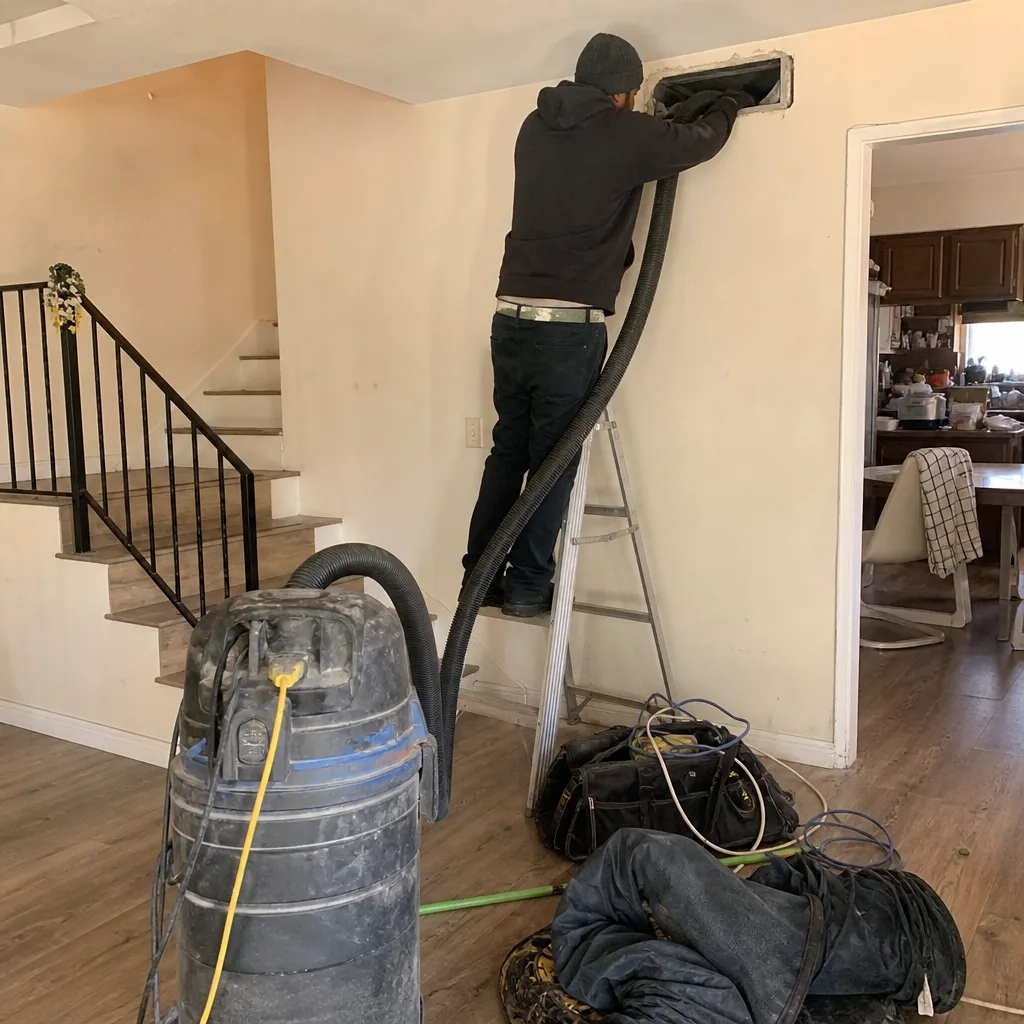 Before
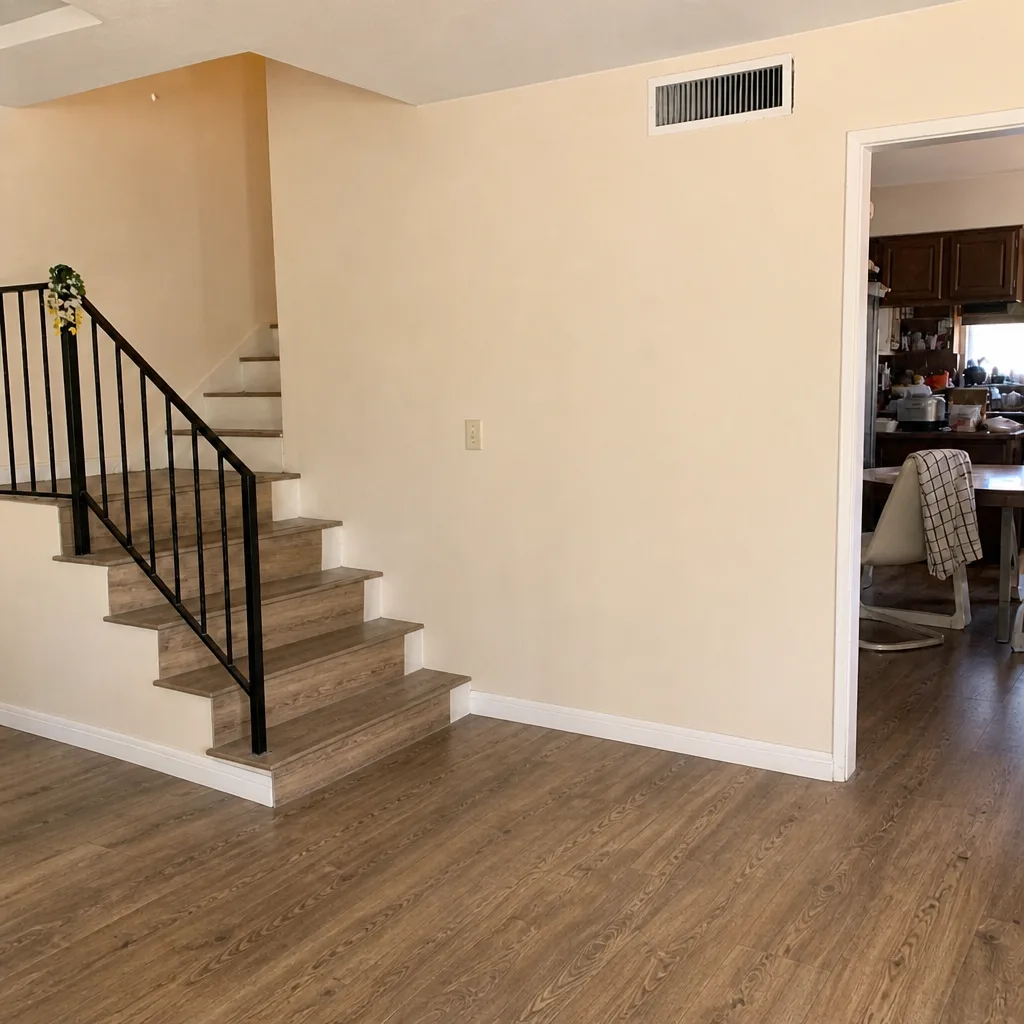 After
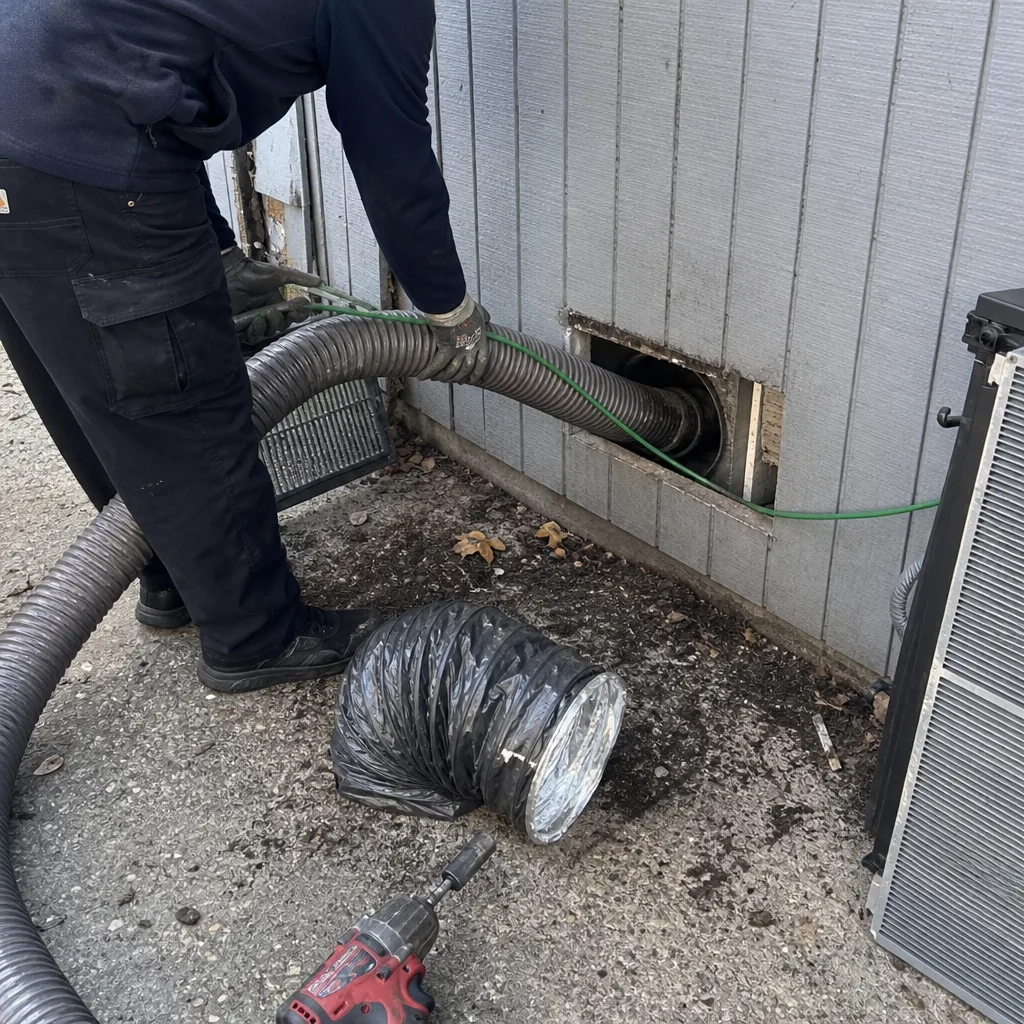 Before
 After
 Before
 After
Frequently Asked Questions
We price per system by written estimate after inspecting your ducts, so the number reflects your actual layout rather than a flat guess. Every estimate is free, the price is agreed before any work starts, and the written estimate sets the final figure. Call (833) 958-9532 for an exact quote.
Cheap quotes often reflect a job without rotary-brush agitation, proper commercial extraction, or a camera inspection, which means the ducts get a surface pass rather than a real clean. Some start with a low teaser figure that grows once the crew is on site. Ask what equipment a company uses and whether before-and-after photos are included. Call (833) 958-9532 and we’ll explain exactly what our job covers.
No, a consumer shop-vac generates roughly 150 CFM of pressure against the 3,000 to 5,000 CFM a truck-mounted system brings, which isn’t enough to extract debris bonded to duct linings. In many cases it disturbs contamination without removing it. For an exact quote on the professional version, call (833) 958-9532, estimates are free.
A proper job includes before-and-after photos of your ducts and a post-cleaning camera inspection that confirms the result. We provide both, so you can see exactly what was removed. Call (833) 958-9532 to book a cleaning or an inspection of a previous job.
Most homes in Daly City benefit from a professional cleaning every few years, sooner after a renovation, a home purchase, or if someone in the house has allergies. Between cleanings, filter changes and grille wiping keep the system in good shape. Call (833) 958-9532 for an estimate tailored to your home.
Yes. Wiping and vacuuming grilles, replacing filters on schedule, vacuuming accessible boots, and inspecting with a flashlight are all safe and useful. What you shouldn’t do is run a brush inside the duct system, especially older flex. Call (833) 958-9532 for an estimate on the interior work.
The Bottom Line
The DIY versus professional question for duct cleaning resolves on one fact: consumer equipment can’t generate the negative pressure needed to extract compacted debris, and no amount of effort closes that gap. So spend your DIY hours on the maintenance that protects a clean system, grilles, filters, flashlight inspections, accessible boots, and hand the interior work to equipment built for it. Make sure any company you hire uses real rotary-brush agitation, commercial extraction, and camera inspection, and gives you photos to prove the result. That’s the standard we hold ourselves to at Duct Cleaning Daly City, and it’s the one worth comparing quotes against. For dryer vent work, our dryer vent cleaning service covers the fire-safety side of the same system.
Ready to get it done right? Call (833) 958-9532 for a free estimate. We answer 24/7. Fast dispatch from 7am to 7pm, Sunday through Friday. One flat price per system agreed before work starts, licensed and insured, with before-and-after photos of your ducts. Duct cleaning, duct repair, and dryer vent cleaning for Daly City homes.
Written by the team at Duct Cleaning Daly City.