
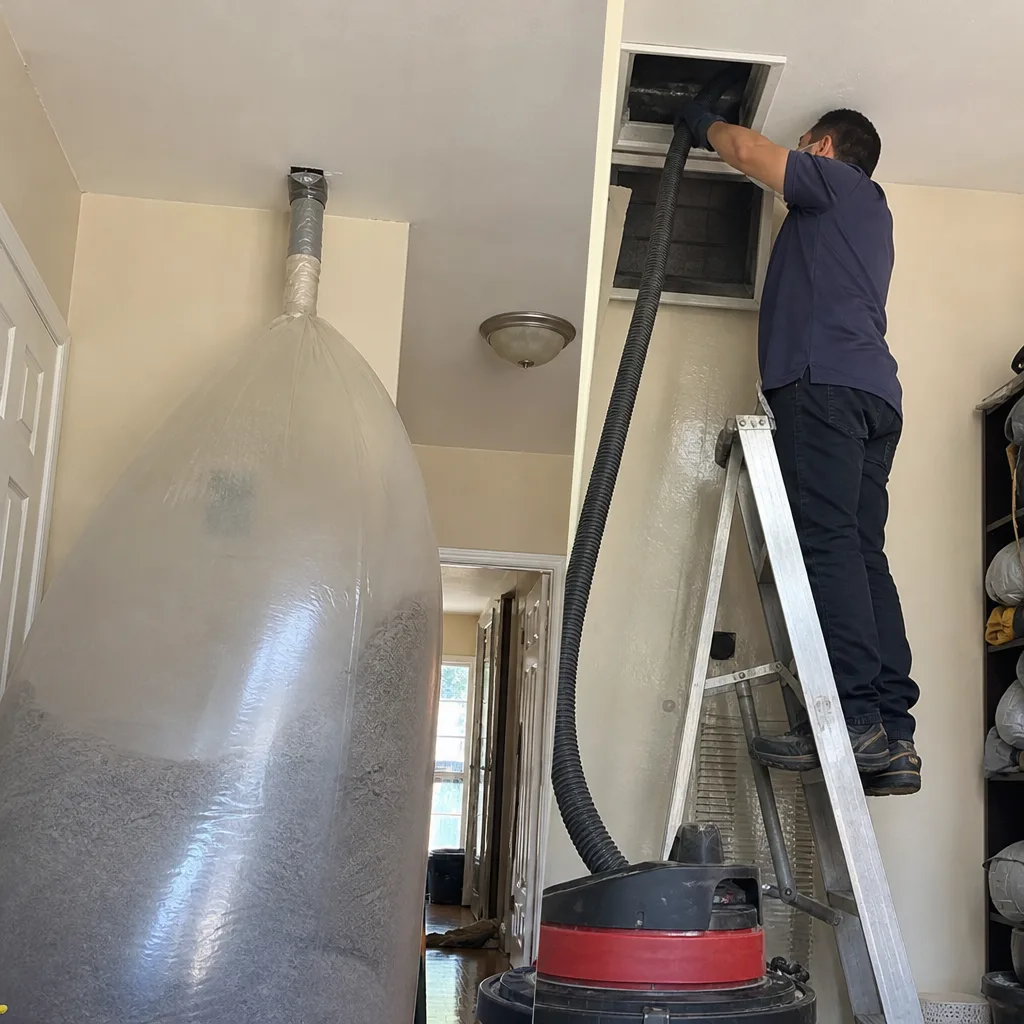
Last updated November 16, 2026
 Whole-home duct cleaning
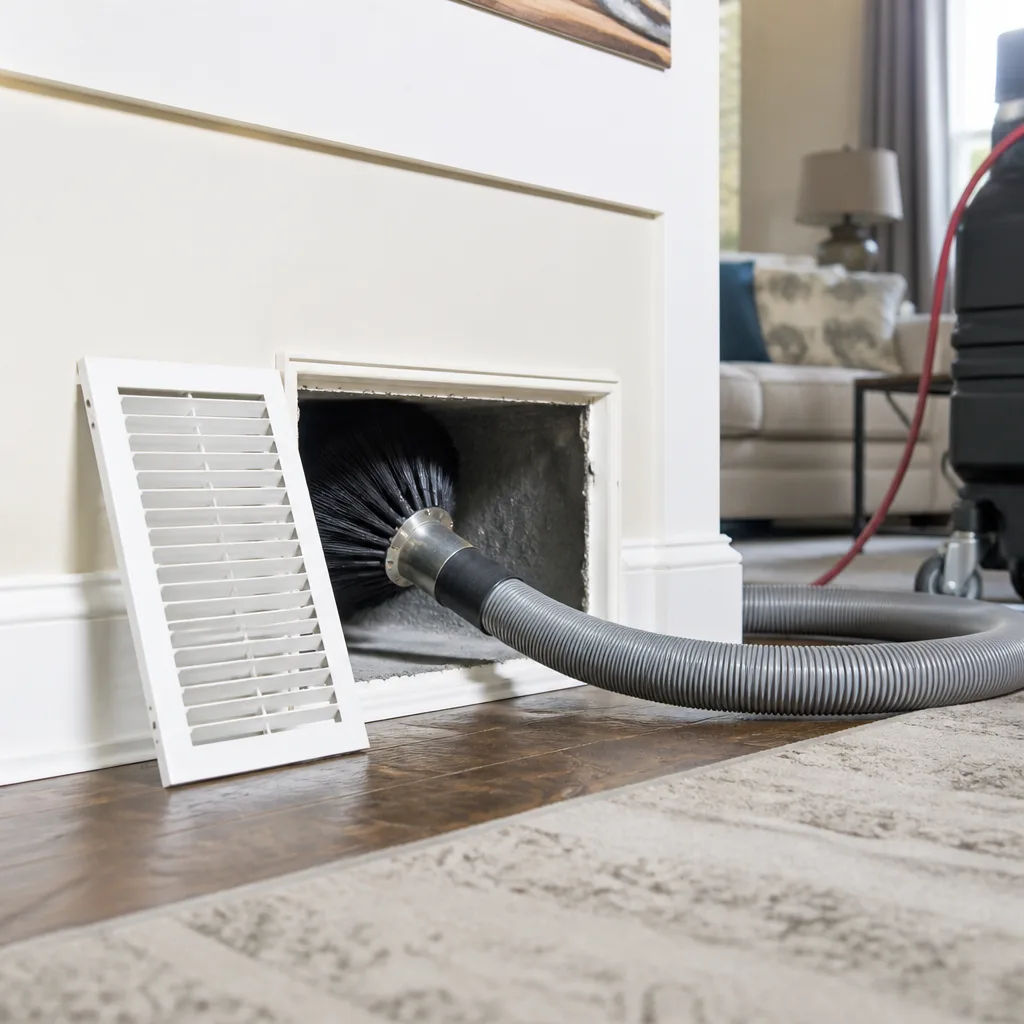
 Dryer vent cleaning
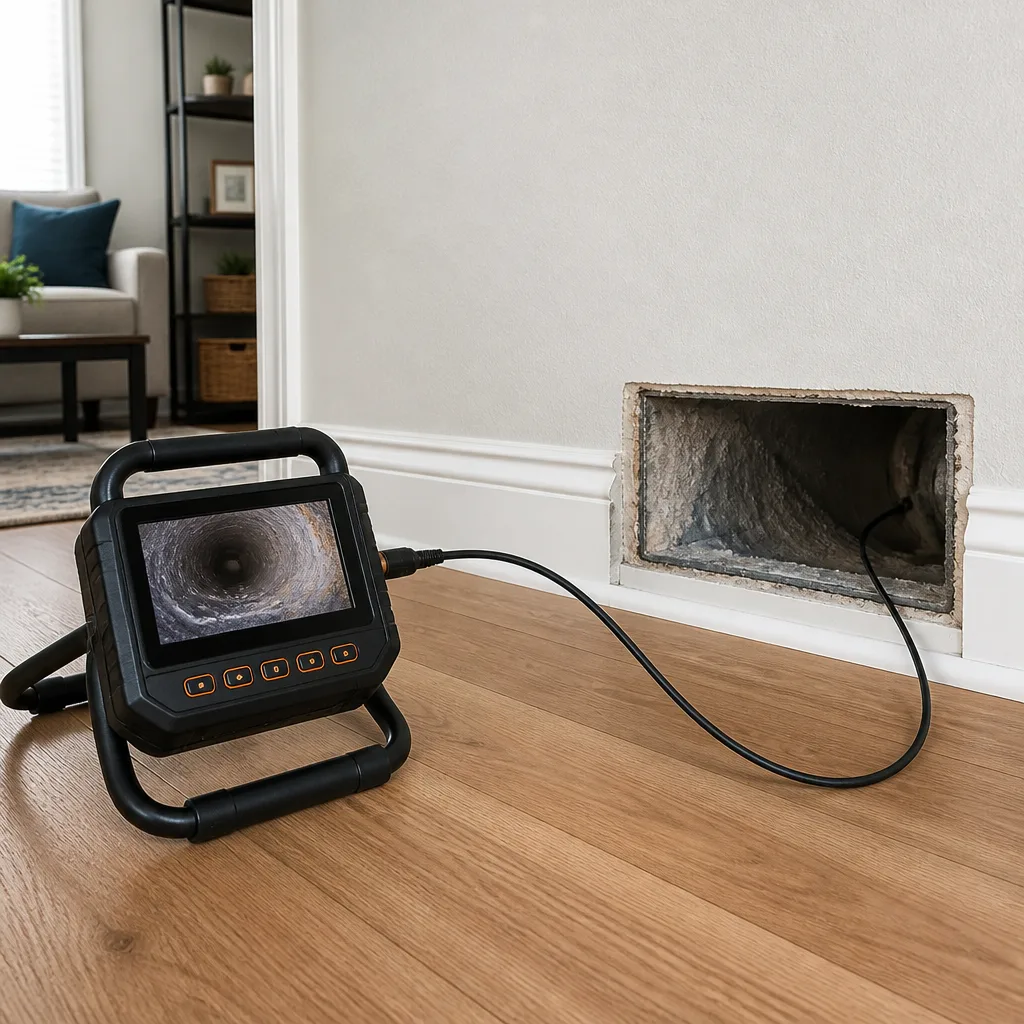 Camera inspection
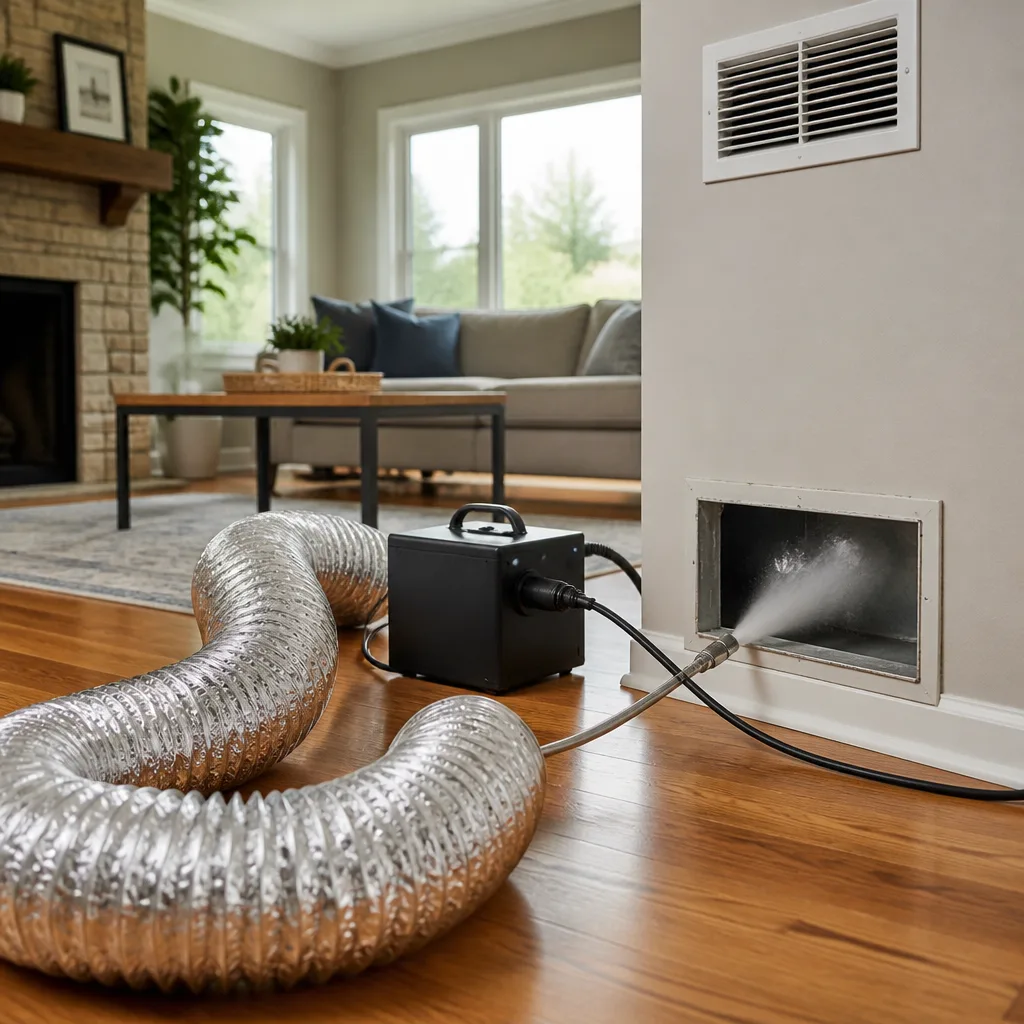 Sanitizing & deodorizing
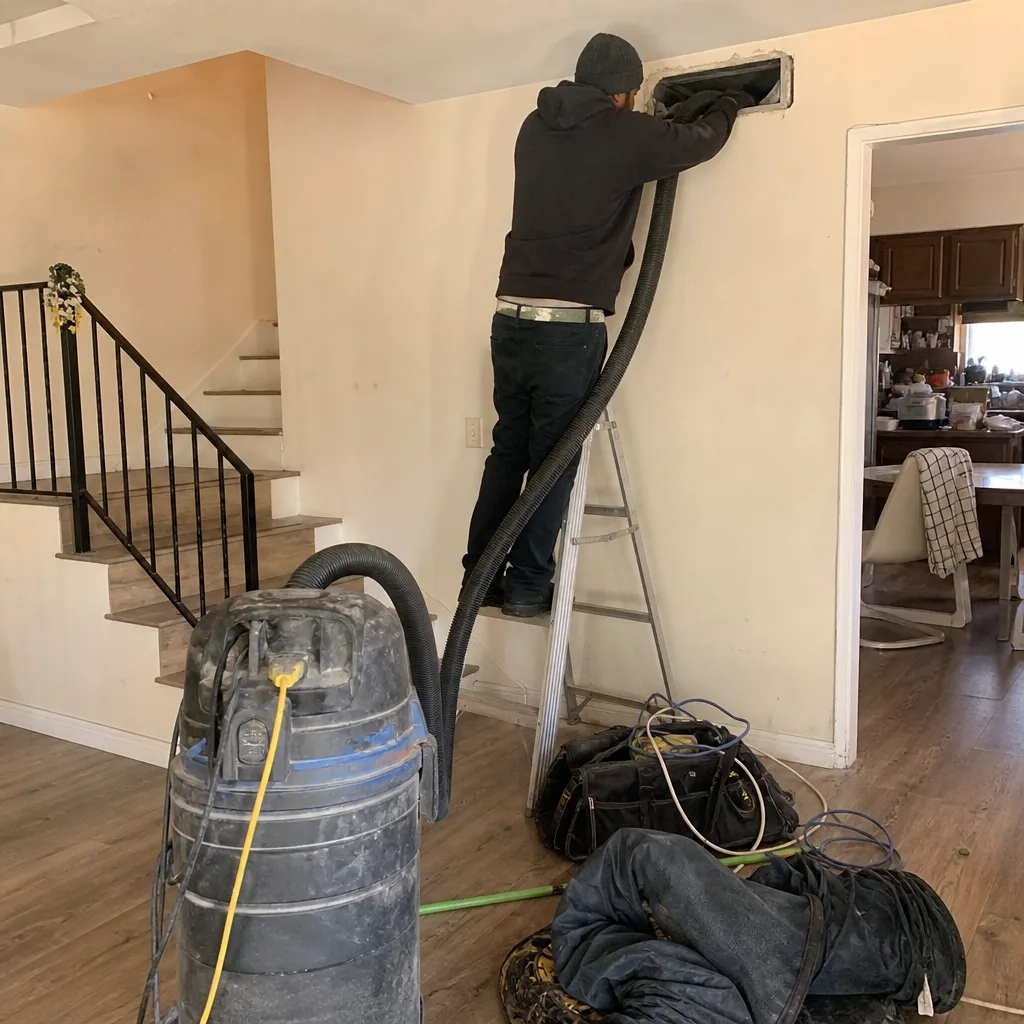
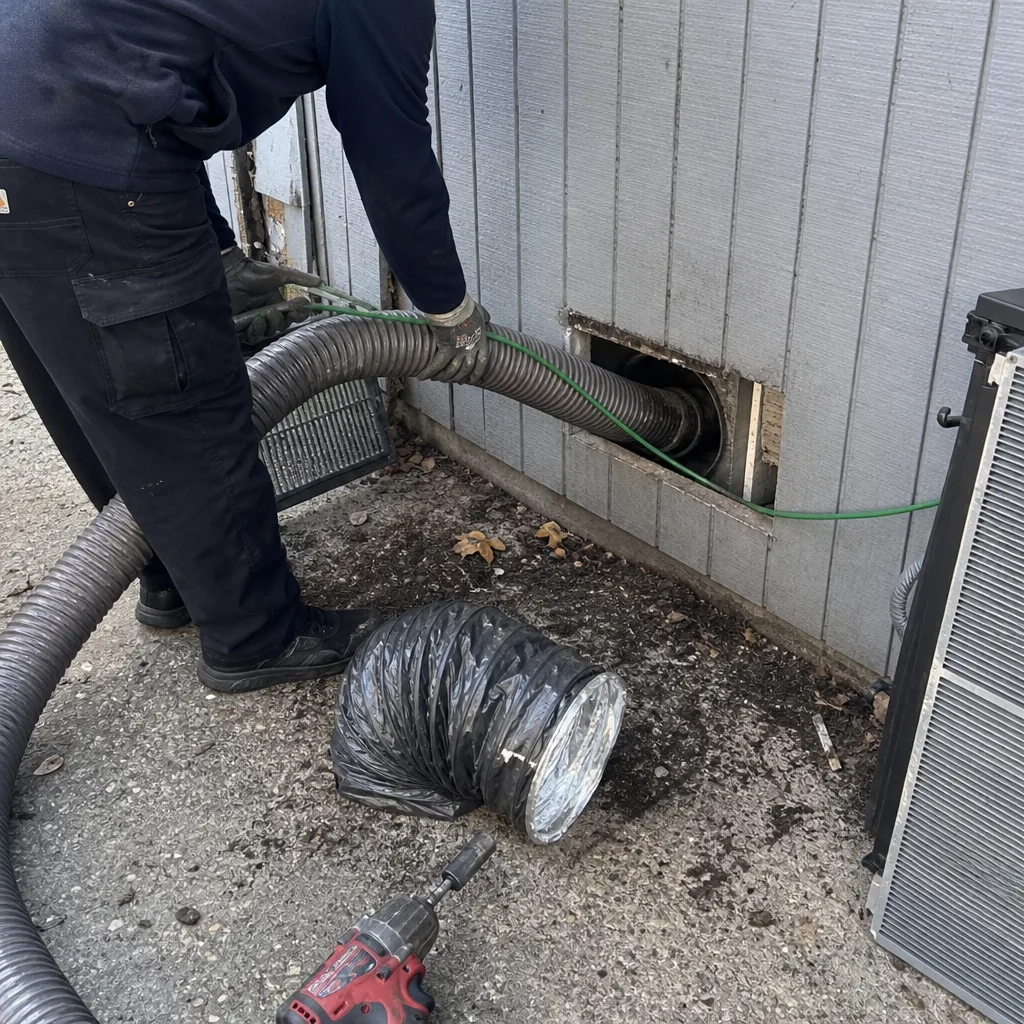
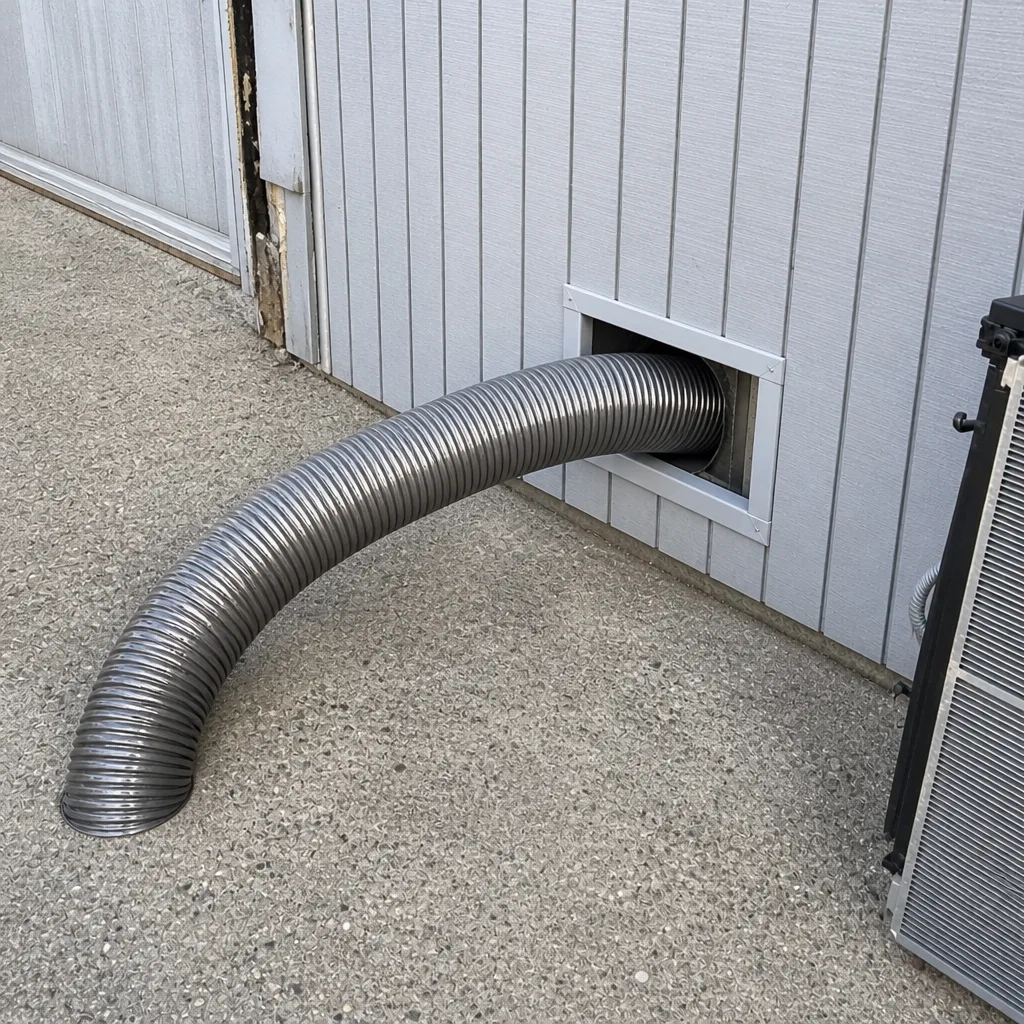
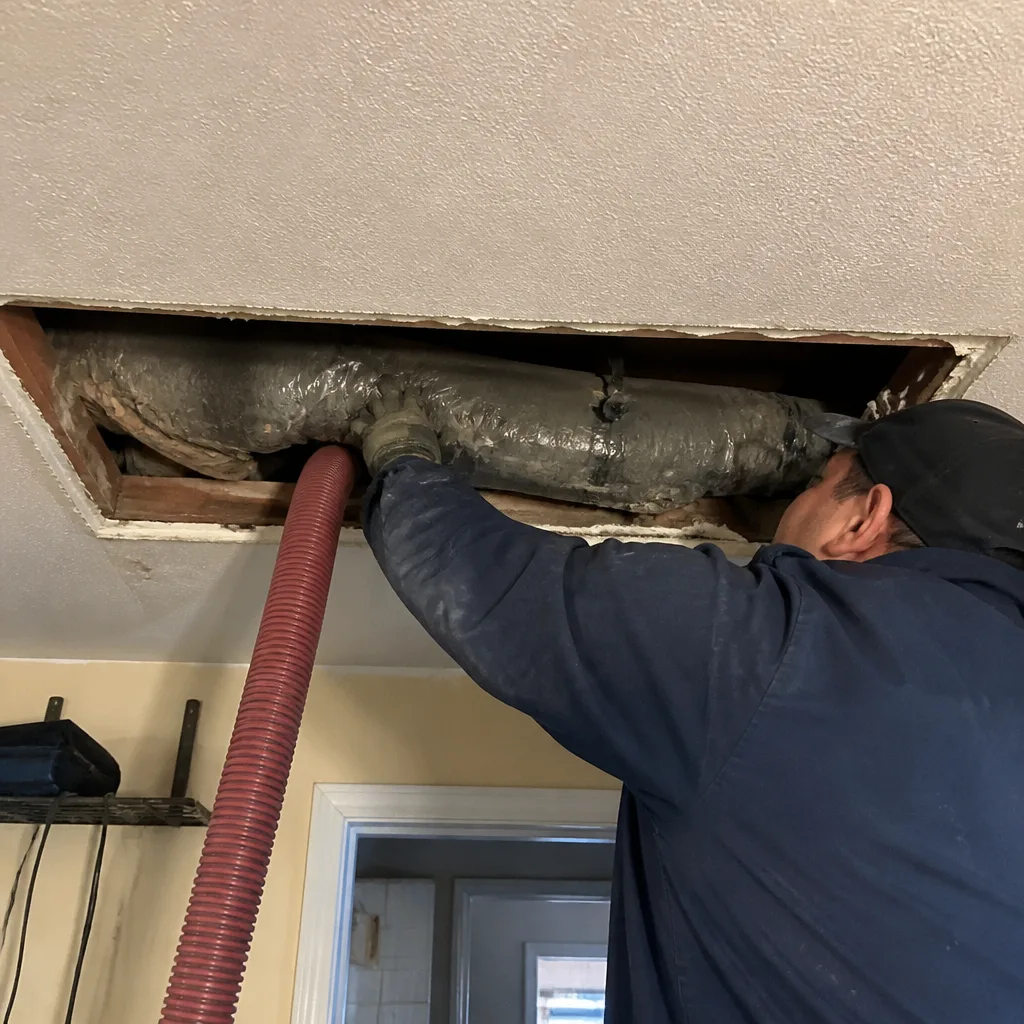
Whole-system duct and dryer vent check with before-and-after photos - you see exactly what came out of your vents
That "$99 whole-house special" is a bait ad - the real number appears once they are in your hallway, or the "clean" is a shop-vac at the register. We photograph the inside of your ducts before and after instead.
Air Duct Repair Maintenance Checklist for Daly City Homeowners
Most duct maintenance advice treats the filter as the whole system. Change it, they say, and you’re done. That advice is wrong for the same reason that changing a car’s oil won’t fix a cracked engine mount. Your ductwork is mechanical infrastructure: flex runs, metal trunks, joints, boots, insulation and a vapor barrier, all of it moving conditioned air through spaces you never see. In Daly City, where the fog rolls in and the air sits damp for long stretches, a loose joint or a sagging duct doesn’t just waste energy. It pulls moisture-laden air into the system. This guide walks you through a real inspection checklist: what to check, when to check it, which repairs hold up in this climate and which don’t.
Quick Answer
A proper air duct maintenance checklist for Daly City covers five things: joint integrity (feel for air leaks at registers and accessible boots), insulation condition (look for compressed or torn flex duct in the crawlspace or attic), moisture signs (condensation, musty smells, rust), filter tracking (log the MERV rating and change date), and a static pressure baseline taken by a technician so you can spot trends. Most of this fits into a twice-yearly routine: a pre-summer check before the fog season and a post-winter check for pest activity and winter wear. The rest requires a technician with a pressure gauge and a camera. Anyone who says a filter change is a full maintenance plan is selling you a fraction of the job.
Styles & brands we work with
- Whole-home duct cleaning
- Dryer vent cleaning
- Camera inspection
- Sanitizing & deodorizing
Table of Contents
- Seasonal Inspection Triggers for Daly City’s Climate
- How to Check Duct Joint Integrity Safely
- Mastic, Metal Tape, or Duct Tape: What Actually Holds
- Insulation Condition in Unconditioned Spaces
- Moisture and Pest Checks Specific to Daly City
- Building a Maintenance Log That Shows Trends
- Static Pressure: The Number That Tells the Story
- Common Mistakes to Avoid
Seasonal Inspection Triggers for Daly City’s Climate
Daly City doesn’t get extreme heat or hard freezes, which is part of why duct problems here go unnoticed for so long. The climate is mild enough that a failing duct system never reaches a crisis point. It degrades slowly. That’s the trap. Two inspection windows matter in this city, and each catches different problems.
Pre-summer, before the fog season. Late spring is when you want to walk the system before the marine layer settles in and the air stays damp for months. During fog season, ducts in crawlspaces and ground-level runs sit in humid air for weeks. A compromised vapor barrier or a torn flex jacket becomes a condensation point. Check for:
- Condensation on or around register boots, especially lower-floor registers.
- Musty or damp smells when the system first kicks on.
- Rust spots on metal boot flanges or duct collars.
- Torn or missing insulation jackets on any flex run you can see.
Post-winter, for pest activity and wear. Rodents and insects treat duct runs in ground-level crawlspaces as shelter. Winter is when they move in. Come spring, check for droppings near crawlspace access, chewed flex duct (they’ll chew through the jacket and the inner liner), and nesting material near boots. Ducts sitting close to the soil in a Daly City crawlspace are a prime target. A damaged flex run from pest activity doesn’t just leak air. It introduces contaminants into your supply air.
If you can’t access the crawlspace or attic safely, that’s not a gap in your routine. That’s the point where a technician belongs on the job. The duct cleaning Daly City process starts with an inspection of exactly these spaces, and so should any maintenance visit.
How to Check Duct Joint Integrity Safely
You can check a surprising amount at the registers without any tools. What you can’t check by feel is the static pressure across the system. That’s the number that reveals whether a leak is serious. Here’s what a homeowner can safely do and where the line sits.
What you can check:
- The register boot seal. Run the system and hold a tissue near the edge where the boot meets the wall or ceiling. If it flutters, air is escaping into the wall cavity instead of the room. That’s a joint that needs sealing from the inside or the room side.
- Accessible flex runs. In a garage or an open crawlspace, look for kinked sections, joints where the inner liner is pulled away from the collar, and disconnected sections. A disconnected joint is obvious: two duct ends that should meet and don’t.
- The hand test. With the system running, move your hand along any exposed joint within reach. A leak you can feel at the hand is a significant leak. Warm or cool air escaping at a joint is costing you money every cycle.
- Noise. Whistling at a register or a hissing sound at a joint often points to a leak or a disconnected run you can’t see.
What needs a technician:
- Static pressure measurement across the return and supply sides. A gauge reads total external static pressure, and comparing it to the system’s rated pressure tells you if the ductwork is restricting airflow or leaking.
- Camera inspection of runs hidden behind drywall or in sealed chases.
- Leak testing on concealed joints and trunk lines.
- Any check requiring you to crawl through a tight or contaminated space. Older Daly City homes often have crawlspaces with limited clearance and years of debris.
If a technician tells you a joint needs repair, ask them to show you where the leak is and what tool they’ll use to fix it. A specific answer is the mark of real work. Our technicians have up to 10 years of experience and our air duct cleaning visits include an inspection of accessible joints before any cleaning starts.
Mastic, Metal Tape, or Duct Tape: What Actually Holds
This is one of the most mismanaged details in home duct repair. Three products get used on duct joints, and only two of them hold in Daly City’s humid fog-season air. Duct tape, the gray cloth-backed stuff, is the worst of the three for ductwork. Its adhesive breaks down in humidity. The backing separates from the adhesive, the joint opens back up, and within a year you’re back to a leaking duct with a flap of tape hanging off it. In our experience on repair jobs in Daly City, tape from a previous “fix” is usually found either peeling or fully detached.
Here’s how the three compare:
- Mastic (duct sealant). A brush-on or hand-applied paste that cures into a permanent seal. It’s the standard for supply-side joints and boot connections. It fills gaps, flexes with the duct, and holds through damp seasons. This is what should go on a joint that needs to last.
- Metal tape (foil-backed, pressure-sensitive). Good for closing a seam on rigid metal duct where the joint is clean and dry. It holds better than cloth tape, but the adhesive can still fail on a dirty or damp surface. Prep matters as much as the tape.
- Duct tape (cloth-backed). Temporary at best on ductwork. It’s fine for a quick fix to get you through a week, not for a permanent repair. In Daly City’s humidity, it degrades within about 18 months, often sooner on a cold joint where condensation forms.
Any repair that uses mastic needs the joint to be clean and dry first. On a damp joint, sealant won’t bond properly. This is why a proper repair starts with cleaning and inspecting the joint, not just brushing sealant over debris. Our Guardsman products sit in the service toolkit as a finishing layer, and the underlying repair still depends on correct surface prep. The same logic applies whether you’re sealing one boot or reconnecting a trunk line: the material matters, and so does the prep.
Insulation Condition in Unconditioned Spaces
Flex duct in a crawlspace or attic loses value when the insulation jacket is damaged. The duct still carries air, but the air loses temperature on the way to the room, and in a humid space the jacket becomes a condensation surface. Two things happen at once: you pay to condition air that never reaches the room, and moisture collects where it shouldn’t. Here’s what to look for on the insulation itself.
- Compression. Flex duct that’s been stepped on, pinched behind a pipe, or bent too sharply loses effective insulation at that point. A compressed section of duct has less insulating thickness and blocks airflow. Both costs land on you.
- Rips and tears in the outer jacket. The silver outer jacket is the vapor barrier. Any tear allows humid Daly City air to reach the insulation, and wet insulation loses most of its insulating value. A torn jacket over a cold duct also produces condensation that can drip into the crawlspace.
- Vapor barrier failures at the joints. Where two flex runs meet, or where a run connects to a boot, the vapor barrier should be continuous. A gap there is both an air leak and a moisture path. Look for the inner liner exposed, or for the outer jacket pulled back from the collar.
- Sagging runs. Flex duct should run taut with gentle curves. A sagging loop traps air, blocks flow, and collects condensation at the low point. This is one of the most common finds on a Daly City inspection.
Any flex run with a torn jacket, a compressed section, or visible moisture inside the insulation should be repaired or replaced, not patched. Wet insulation doesn’t dry out once it’s sealed in a damp crawlspace. A technician with a camera can check the sections you can’t reach and tell you which runs are worth saving and which need replacement. Air duct repair is a core part of what we do alongside cleaning, because a cleaned system with a leaking jacket stays a leaking system. In our experience, the runs that look fine from the crawlspace hatch are often the ones a camera reveals as problems.
Moisture and Pest Checks Specific to Daly City
Daly City’s fog season runs the humidity up for weeks at a time, and the low-lying areas near the coast sit in that damp longer than the higher neighborhoods. Ducts in crawlspaces and ground-level runs are the ones at risk. Moisture and pests go together: a damp crawlspace with open duct joints is an invitation for both. Here’s the checklist.
Moisture checklist:
- Check for musty smell when the system first runs in the morning or after sitting idle.
- Look at the supply registers on lower floors for condensation rings on the wall or ceiling around the boot.
- Look at the ductwork visible in the crawlspace for water staining, sagging, or dark patches on the insulation.
- Check the crawlspace floor for standing water or damp soil after a rainy stretch.
- Check any accessible duct collar or metal fitting for rust.
Pest checklist:
- Look for droppings near the crawlspace access hatch and along duct runs.
- Check flex duct for chew marks or holes in the outer jacket.
- Check for nesting material near boots or at duct transitions.
- Listen for scratching or movement in the walls or crawlspace.
- Have any visible damage inspected by a technician before cleaning or repair, since contaminated ductwork needs to be handled with proper containment.
This is where equipment matters. Cleaning a duct system with pest debris or post-renovation dust requires real containment, not a shop vac and a length of hose. We use Abatement Technologies equipment for HEPA-level particulate containment during cleaning, and Nikro commercial-grade vacuums on every job. If you’ve had a renovation, a pest problem, or a damp crawlspace, that containment is what keeps the debris from re-entering your living space. Our dryer vent cleaning service gets the same treatment: the dryer vent cleaning visit uses the same vacuum and containment setup, because a clogged dryer vent is a fire risk, not a maintenance afterthought.
Building a Maintenance Log That Shows Trends
A maintenance log is the single lowest-cost thing you can do for your duct system, and almost nobody keeps one. The point isn’t record-keeping for its own sake. It’s trend visibility. A static pressure reading that climbs over two years tells you something a single reading never will: the system is getting restricted. A filter that’s loading faster than it used to points to dust source problems upstream. Without a log, every visit is a fresh start and nobody sees the pattern. Here’s a template you can keep in a notebook or a spreadsheet.
- Date of each service visit, inspection, or filter change.
- Filter MERV rating used and the filter size. Track this so you know what’s in the system and whether the rating matches your equipment’s airflow capability. A higher MERV rating isn’t automatically better if the system can’t move enough air through it.
- Static pressure reading taken by the technician, both total external and the supply and return side readings if available. This is your baseline. Every future reading gets compared to it.
- Repair locations by room or by run description, and what material was used (mastic, metal tape, replaced flex run). This tells you if the same joint keeps failing.
- Cleaning dates and which equipment and containment was used.
- Notes on moisture or pest findings at each visit, even if no action was taken.
- Drill: when to look at the log. Review it before any service call, and once a year on your own. If static pressure has risen or the same repair has been made twice, that’s the signal to ask a technician what’s changing upstream.
Our technicians record what they find and what they repair so your log stays complete. Ask for it. A technician who knows the system’s history makes better repair decisions than one seeing it for the first time.
Static Pressure: The Number That Tells the Story
Static pressure is the most useful single number in duct maintenance, and it’s the one homeowners rarely hear about. Total external static pressure measures how hard the blower is working to push air through the duct system. Every duct system has a rated pressure. When the measured pressure climbs above that, the system is restricted: dirty filters, undersized ducts, collapsed flex runs, or a combination. A leaking duct lowers pressure on the supply side while starving the rooms of air. A restricting duct raises it. Either way, the blower motor and your energy bill pay for it.
Why it matters more than a visual inspection:
- A duct system can look fine from a crawlspace hatch and still have elevated static pressure from a crushed run you can’t see.
- A baseline reading taken when the system is clean gives you a reference point. If pressure climbs over the next two years, you have a diagnostic trail instead of a mystery.
- It tells you whether a filter upgrade is safe. A high-MERV filter on a duct system that’s already restricted can drop airflow enough to cause problems.
- It separates a leak problem from a restriction problem, which are different repairs.
Ask for the reading on a service visit and write it in your log. Our technicians carry pressure gauges and cameras as part of the inspection, and we use Rotobrush rotary-brush systems to physically agitate and extract debris rather than just blowing air through the system. A pressure reading before and after cleaning tells you whether the cleaning made a measurable difference. That’s the kind of check that separates a real inspection from a filter change.
Common Mistakes to Avoid
- Treating a filter change as a full maintenance plan. It’s one item on a twenty-item checklist. The duct system itself gets zero attention in that routine, and that’s where the energy loss and air quality problems originate.
- Using duct tape for a permanent repair. In Daly City’s humidity, cloth-backed tape fails within about 18 months. It’s a temporary fix at best. Mastic is the material for a repair that holds.
- Sealing a leak without cleaning the joint first. Sealant won’t bond to a damp or dirty joint, and Daly City joints are frequently damp. Prep determines whether the seal lasts.
- Skipping the crawlspace. The most common problems, from disconnected flex runs to pest damage to wet insulation, live in spaces you don’t see. A checklist that skips the crawlspace skips the problem.
- Patching wet insulation instead of replacing it. Wet insulation doesn’t dry out in a sealed damp space. Patching the jacket still leaves wet insulation inside a vapor barrier. That run needs replacement, not a patch.
- Never recording a static pressure baseline. Without a baseline, every future reading is a guess. With one, a climbing trend tells you something is changing upstream before it becomes a failure.
- Postponing a dryer vent check because the dryer still runs. A restricted dryer vent is a fire risk, and the dryer runs fine right up until it doesn’t. It belongs on the same twice-yearly rhythm as the duct inspection.
- Assuming a cheaper quote is the same job. Cleaning without containment, without a joint inspection, and without a pressure reading is a different job than one with all three. The quote that doesn’t mention equipment or inspection is the one to question.
See the difference
 Before
 After
 Before
 After
 Before
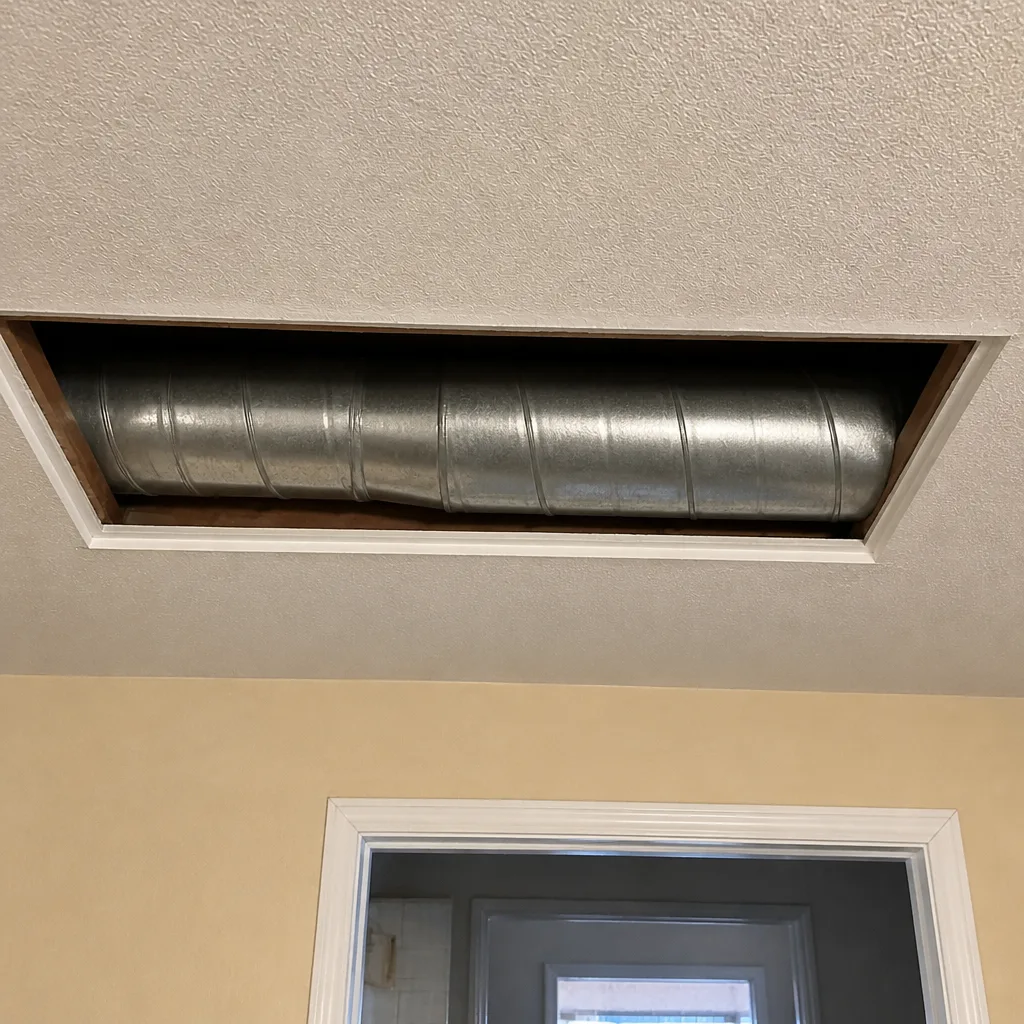 After
When to Call a Professional
Some checks belong in your twice-yearly routine. Others belong to a technician with the right equipment. Call a professional if you find any of the following:
- A disconnected or visibly damaged flex run you can’t safely reach.
- A static pressure reading above the system’s rated pressure.
- Pest damage or droppings in duct runs.
- Wet insulation or a torn vapor barrier in the crawlspace or attic.
- Musty smell from supply registers that doesn’t clear after a filter change.
- Any repair that requires sealing joints behind drywall or in a sealed chase.
- A dryer vent that hasn’t been inspected in over a year.
Duct Cleaning Daly City offers free estimates in Daly City. Call (833) 958-9532. We answer 24/7. Fast dispatch from 7am to 7pm, Sunday through Friday. Our Daly City service covers the full checklist: air duct cleaning, air duct repair, and dryer vent cleaning, with the containment and inspection tools that make the findings mean something. We use Aprilaire and Honeywell-compatible equipment for filtration upgrades when a system needs it. You get a written estimate before any work starts.
Frequently Asked Questions
Twice a year works well for most Daly City homes: once in late spring before the fog season, and once in early spring after winter. Homes with crawlspace ductwork, older construction, or a recent renovation benefit from the pre-summer check especially, since that’s when moisture problems show up. A full professional inspection with static pressure and camera coverage is worth doing on the same twice-yearly rhythm. Call (833) 958-9532 for an exact quote. Estimates are free.
You can check accessible register boots and any visible flex runs. Run the system, hold a tissue near the boot edge, and feel along exposed joints by hand. A fluttering tissue or a leak you can feel means air is escaping. What you can’t check by feel is static pressure across the system, or leaks inside walls and sealed chases. Call (833) 958-9532 to schedule a pressure check. Estimates are free.
Mastic sealant is what holds for a permanent repair in Daly City’s climate. Metal tape works on clean, dry rigid joints. Cloth duct tape degrades in humidity and fails in about 18 months, often sooner. The prep matters as much as the material: sealant won’t bond to a damp or dirty joint. Call (833) 958-9532 and we’ll recommend the right repair for the joint you have. Estimates are free.
Static pressure measures how hard the blower is working to move air through the ducts. A reading above the system’s rated pressure means the system is restricted: dirty filters, undersized runs, or a collapsed flex duct. A baseline reading lets you spot a climbing trend before it becomes a failure. It’s the single most useful diagnostic number for duct maintenance, and a filter change doesn’t reveal it. Call (833) 958-9532 to have a baseline taken. Estimates are free.
Ask for before-and-after photos of your own ducts, a static pressure reading before and after cleaning, and a written summary of what was found and repaired. Our cleaning uses Rotobrush rotary-brush systems and Nikro commercial-grade vacuums, so the work is mechanical, not just air. Abatement Technologies containment keeps debris out of the living space. A technician who can’t show you the findings hasn’t done the inspection. Call (833) 958-9532 for an exact quote. Estimates are free.
Yes. Dust, debris, and any moisture or pest material in a duct system get pulled into the supply air with every HVAC cycle. In Daly City’s fog season, the damp air that hangs over the crawlspace adds to the problem. That’s why containment during cleaning matters, and why any moisture or pest damage should be repaired before a system is put back in service. Call (833) 958-9532 to schedule an inspection. Estimates are free.
The Bottom Line
Duct maintenance isn’t a filter change. It’s a twice-yearly checklist that treats the duct system as mechanical infrastructure: joint integrity, insulation condition, moisture and pest checks, sealant choice, a maintenance log, and a static pressure baseline. In Daly City’s mild, damp climate, the problems build slowly enough to go unnoticed, which is exactly why a written routine beats a reactive one. Mastic holds, duct tape doesn’t, wet insulation gets replaced, and a pressure reading gives you a trend to watch. Our technicians have up to 10 years of experience, and our dryer vent cleaning and duct work use the same professional equipment on every job. Keep the log. Take the readings. Call (833) 958-9532 when the checklist turns up something that needs a technician. Estimates are free.
Written by the team at Duct Cleaning Daly City.